


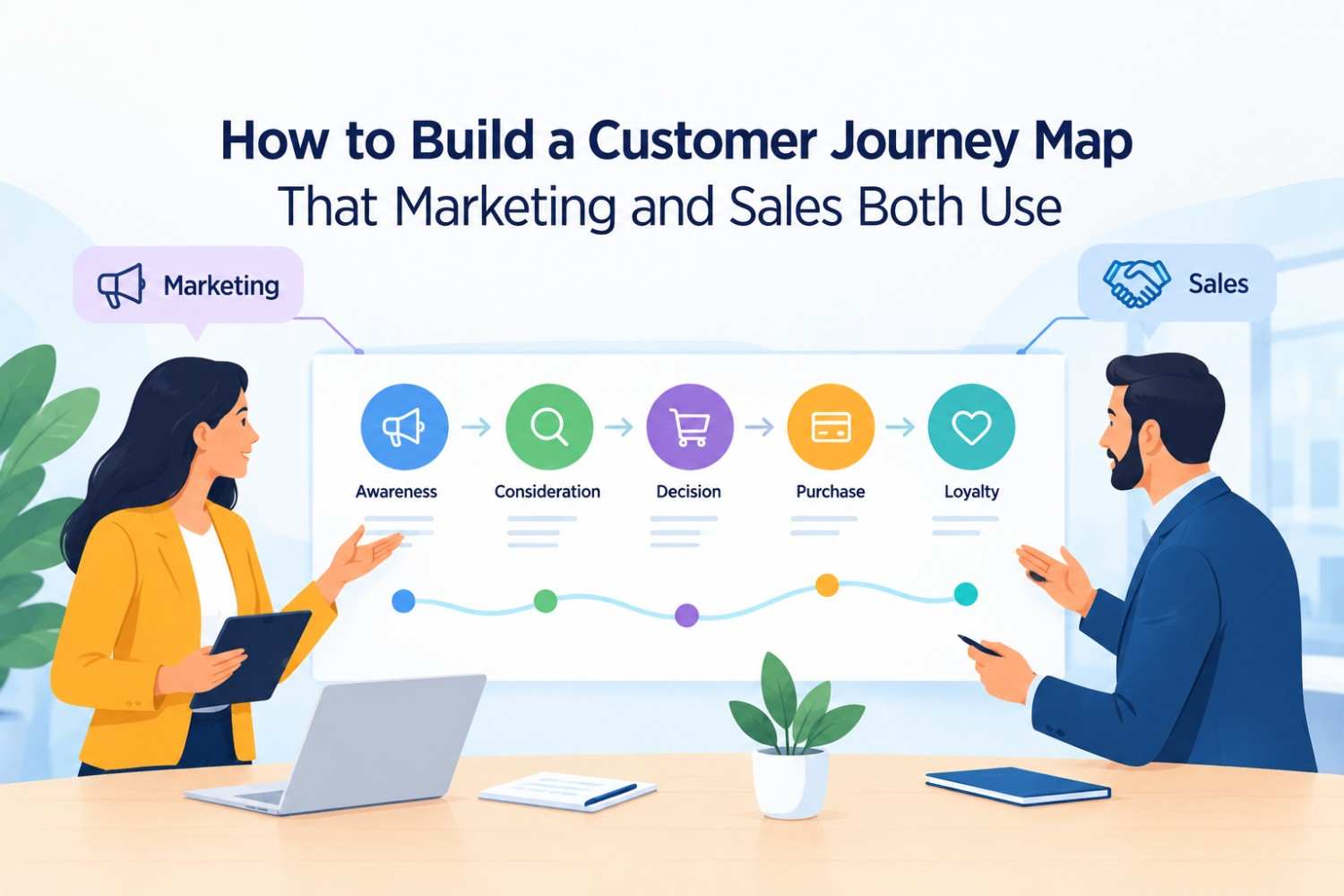
In many B2B companies, marketing and sales interact with buyers at different stages, which often leads to different views of the customer journey. Marketing tracks how prospects discover and research solutions, while sales focus on conversations that happen closer to a purchase decision. When these teams work from separate assumptions, lead handoffs become inconsistent and the buyer experience suffers.
A shared customer journey map helps both teams understand how buyers move from initial research to vendor evaluation, purchase, and post-sale engagement. It provides a common reference point for planning campaigns, qualifying leads, and supporting prospects throughout the buying process.
The problem is that many journey maps are created for marketing alone. To support a successful sales marketing alignment journey, the map must guide decisions across both teams and reflect the real customer experience.
Why Customer Journey Mapping Matters in B2B Organizations
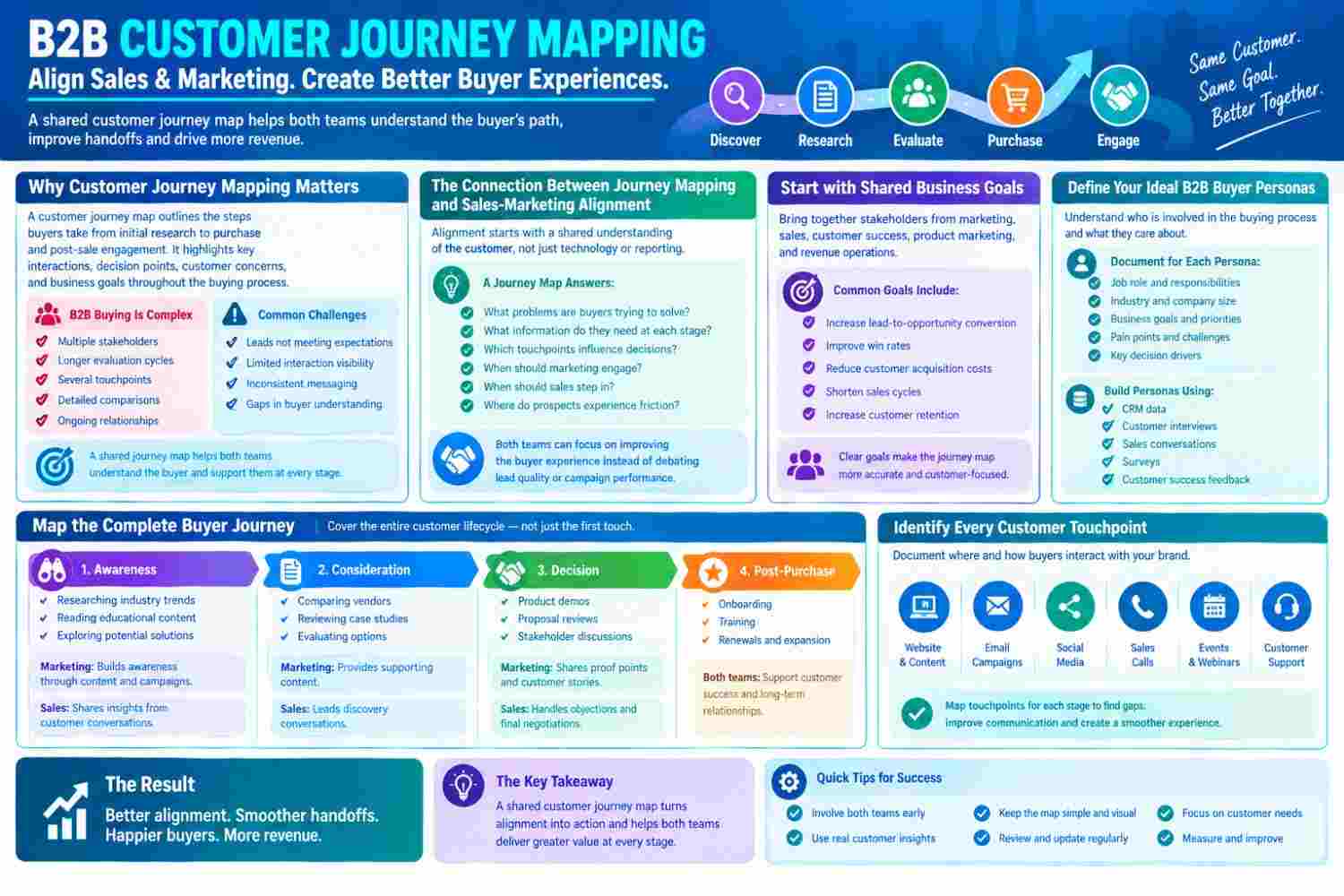
A customer journey map outlines the steps buyers take from initial research to purchase and post-sale engagement. It highlights key interactions, decision points, customer concerns, and business goals throughout the buying process.
Unlike B2C purchases, B2B buying decisions often involve:
- Multiple stakeholders with different priorities
- Longer evaluation and approval cycles
- Several touchpoints across channels
- Detailed product and vendor comparisons
- Ongoing relationships beyond the sale
This complexity can create disconnects between marketing and sales. Common challenges include:
- Leads that fail to meet sales expectations
- Limited visibility into prospect interactions
- Inconsistent messaging across channels
- Gaps in understanding buyer motivations
A shared journey map helps both teams understand the buyer’s path and support prospects more effectively at every stage.
The Connection Between Journey Mapping and Sales-Marketing Alignment
When organizations think about alignment, they often focus on technology, reporting structures, or lead scoring models. While these elements matter, real alignment starts with a shared understanding of the customer.
A journey map creates that alignment by answering questions such as:
- What problems are buyers trying to solve?
- What information do they need at each stage?
- Which touchpoints influence decisions?
- When should marketing engage?
- When should sales step in?
- Where do prospects experience friction?
Instead of debating lead quality or campaign performance, both teams can focus on improving the buyer experience.
Start with Shared Business Goals
Before creating a journey map, bring together stakeholders from marketing, sales, customer success, product marketing, and revenue operations. The objective is to establish common goals that both teams can work toward.
Examples include:
- Increasing lead-to-opportunity conversion rates
- Improving win rates
- Reducing customer acquisition costs
- Shortening sales cycles
- Increasing customer retention
When teams agree on clear objectives from the start, the journey map is more likely to reflect customer needs rather than departmental perspectives.
Define Your Ideal B2B Buyer Personas
Journey mapping starts with understanding who is involved in the buying process. In B2B environments, purchasing decisions often include multiple stakeholders, such as decision-makers, influencers, end users, procurement teams, and executives.
For each persona, document:
- Job role and responsibilities
- Industry and company size
- Business goals and priorities
- Common challenges and pain points
- Key decision drivers
Marketing and sales should build these personas using insights from:
- CRM data
- Customer interviews
- Sales conversations
- Surveys
- Customer success feedback
A shared understanding of buyer personas helps both teams create a more accurate journey map.
Map the Complete Buyer Journey
Many journey maps focus on awareness and lead generation while overlooking what happens after a prospect enters the pipeline. A useful customer journey map B2B organizations can rely on should cover the entire customer lifecycle.
Awareness Stage
- Researching industry trends
- Reading educational content
- Exploring potential solutions
Marketing: Builds awareness through content and campaigns.
Sales: Shares insights from customer conversations.
Consideration Stage
- Comparing vendors
- Reviewing case studies
- Evaluating options
Marketing: Provides supporting content.
Sales: Leads discovery conversations.
Decision Stage
- Product demos
- Proposal reviews
- Stakeholder discussions
Marketing: Shares proof points and customer stories.
Sales: Handles objections and final negotiations.
Post-Purchase Stage
- Onboarding
- Training
- Renewals and expansion
Both teams continue supporting customer success and long-term relationships.
Identify Every Customer Touchpoint
The next step is documenting every interaction buyers have with your organization. These touchpoints may occur across marketing, sales, and customer support channels.
Common touchpoints include:
- Website visits, blogs, and email campaigns
- Discovery calls and product demonstrations
- Proposal discussions and follow-up meetings
- Training sessions, support portals, and customer events
For each touchpoint, identify:
- The buyer’s goal
- Questions they may have
- Potential barriers
- The team responsible for the interaction
This exercise helps reveal gaps, overlaps, and missed opportunities across the customer journey.
Capture Customer Emotions and Pain Points
B2B purchases are often driven by business goals, but emotions still influence decisions. Buyers may worry about choosing the wrong vendor, securing stakeholder approval, or justifying their investment.
A strong customer journey map B2B teams can use should capture these concerns alongside buyer actions.
For each stage, identify:
- Customer goals
- Key questions
- Common concerns
- Signs of buying confidence
Understanding these factors helps marketing and sales create more relevant conversations, address objections earlier, and support buyers throughout the decision-making process.
Align Content and Sales Activities to Each Journey Stage
Journey maps are most useful when each stage is tied to specific content and sales activities. Buyers need different information as they move through the decision process.
Examples include:
- Awareness: blogs, industry reports, and webinars
- Consideration: product guides, checklists, and case studies
- Decision: ROI calculators, testimonials, and implementation plans
- Expansion: training resources, best-practice guides, and product updates
Sales activities should also align with each stage to support buyers with relevant conversations and timely follow-ups.
For example:
|
Journey Stage |
Marketing Activity |
Sales Activity |
|
Awareness |
Educational content |
Market intelligence |
|
Consideration |
Nurture campaigns |
Discovery calls |
|
Decision |
Case studies |
Demonstrations and proposals |
|
Expansion |
Customer engagement campaigns |
Account growth planning |
Use Data to Validate the Journey
A journey map should be based on actual customer behavior rather than assumptions. Use data from multiple sources to understand how buyers move through the process.
Useful sources include:
- CRM records
- Website analytics
- Customer interviews
- Call recordings
- Customer support data
Look for common drop-off points, recurring questions, and delays in decision-making. These insights help marketing and sales build a journey map that reflects real customer experiences.
Create Ownership Across Departments
Many journey mapping efforts lose momentum because no team is responsible for maintaining them. Rather than assigning ownership to a single department, create shared accountability across key functions.
Responsibilities may include:
- Marketing: content development, campaign tracking, and awareness-stage engagement
- Sales: discovery insights, objection tracking, and buyer feedback
- Revenue Operations: reporting, measurement, and process monitoring
When multiple teams contribute to the map and review it regularly, it remains relevant and useful. This shared approach supports a stronger sales marketing alignment journey and encourages teams to work toward common customer and revenue goals.
Review and Update the Journey Regularly
Buyer behavior, decision-making processes, and preferred channels can change over time. As a result, journey maps should be reviewed and updated on a regular basis.
Consider evaluating:
- Changes in buying behavior
- New decision-makers
- Emerging customer concerns
- Additional touchpoints
- Performance trends across stages
Many organizations revisit their journey maps quarterly or twice a year. Regular reviews help keep the map accurate, useful, and aligned with current customer expectations.
Common Mistakes to Avoid
As companies build customer journey maps, several mistakes can reduce their effectiveness.
1. Mapping Internal Processes Instead of Customer Experiences
A journey map should focus on how buyers interact with your business, not on internal workflows. The goal is to understand customer actions, needs, and challenges at each stage.
2. Ignoring Existing Customers
Many organizations stop mapping the journey after conversion. This overlooks important stages such as onboarding, retention, renewals, and expansion opportunities that contribute to long-term revenue.
3. Building Maps Without Sales Input
Sales teams speak directly with prospects and customers throughout the buying process. Excluding their insights can leave gaps in the journey map and create an incomplete view of buyer behavior.
4. Using Assumptions Instead of Data
Internal opinions do not always reflect reality. Customer interviews, CRM data, analytics, and sales conversations often reveal patterns that teams may otherwise miss.
5. Treating the Map as a One-Time Project
Buyer expectations, market conditions, and decision-making processes change over time. Regular reviews help keep the journey map relevant and useful for both marketing and sales.
Conclusion
A customer journey map delivers the most value when both marketing and sales use it as a shared guide rather than treating it as a marketing-only initiative. When teams work from the same understanding of buyer needs, decision points, and interactions, they can create a more consistent customer experience across the entire lifecycle.
A well-developed customer journey map helps uncover gaps, improve collaboration, and create more consistent customer experiences throughout the buying process. Combined with a strong sales marketing alignment journey, it gives teams a practical framework for improving engagement, lead quality, and customer relationships.
FAQs
1. What is a customer journey map in a B2B environment?
A B2B customer journey map outlines the steps buyers take from initial research through purchase and post-sale engagement. It helps teams understand customer needs, decision points, challenges, and interactions throughout the lifecycle.
2. Why is customer journey mapping important for sales and marketing alignment?
Customer journey mapping gives marketing and sales a shared view of buyer behavior. It helps improve lead handoffs, coordinate messaging, identify process gaps, and create more consistent experiences across the buying journey.
3. Who should be involved in creating a customer journey map?
An effective journey map should include input from marketing, sales, customer success, product marketing, and revenue operations. Each team contributes unique insights that help create a more accurate view of customers.
4. What data should organizations use when building a customer journey map?
Organizations should use customer interviews, CRM records, website analytics, sales conversations, support interactions, surveys, and win-loss analysis. These sources help validate buyer behavior and uncover opportunities for improvement.
5. How does a customer journey map help improve business performance?
A customer journey map helps teams identify friction points, improve customer interactions, and support buyers with relevant information. This often leads to stronger engagement, higher conversion rates, and better customer retention.