



Programmatic advertising remains a key channel for B2B marketers looking to reach decision-makers with greater precision. In 2026, the focus is no longer just on automating ad buying. Businesses are looking for better audience quality, stronger data strategies, transparent media buying, and measurable outcomes.
With growing attention on data privacy and user consent, many organizations are relying on first-party data, demand-side platforms (DSPs), and private marketplaces (PMPs) to connect with relevant prospects. This demand side platform guide explores how DSPs and PMPs work, their benefits for B2B marketers, and the factors buyers should evaluate before making an investment.
Understanding Programmatic Advertising in B2B Marketing
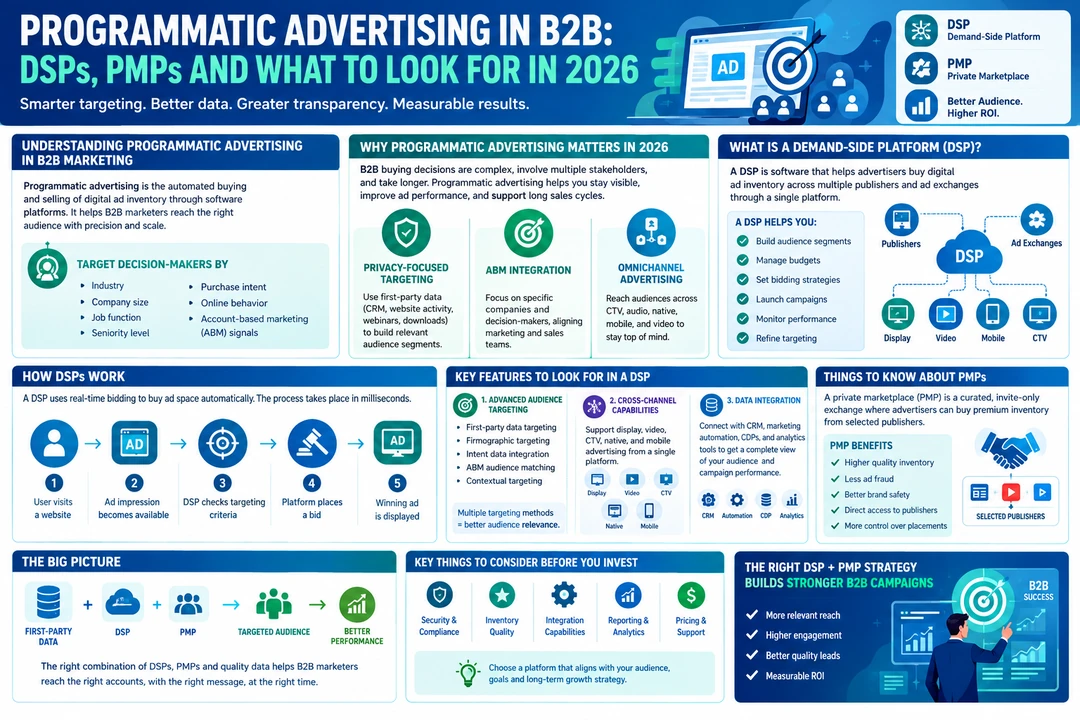
Programmatic advertising refers to the automated buying and selling of digital ad inventory through software platforms. Instead of negotiating media placements manually, advertisers use technology to purchase ad impressions in real time.
For B2B marketers, programmatic advertising offers a more targeted approach compared to traditional digital advertising methods. Companies can reach decision-makers based on factors such as:
- Industry
- Company size
- Job function
- Seniority level
- Purchase intent
- Online behavior
- Account-based marketing (ABM) signals
Why Programmatic Advertising Matters in 2026
B2B buying decisions often involve multiple stakeholders, longer research cycles, and several digital touchpoints before a purchase is made. As a result, marketers need ways to stay visible and relevant throughout the decision-making process.
For many businesses, programmatic advertising B2B 2026 strategies offer a practical way to reach targeted audiences, improve ad performance, and support long sales cycles.
1. Privacy-Focused Targeting
With tighter privacy standards affecting digital advertising, businesses are relying more on first-party data such as CRM records, website activity, webinar registrations, and content downloads. This helps create audience segments that support more relevant targeting.
2. Account-Based Marketing Integration
Many B2B organizations are combining programmatic advertising with account-based marketing (ABM). Rather than targeting broad audiences, campaigns focus on specific companies and decision-makers, helping marketing and sales teams work toward shared goals.
3. Omnichannel Advertising
Programmatic campaigns now extend beyond display advertising. Marketers can reach audiences through Connected TV (CTV), digital audio, native advertising, mobile apps, and video platforms. A presence across multiple channels helps brands stay top of mind throughout the buying journey.
What Is a Demand-Side Platform?
A demand-side platform (DSP) is software that helps advertisers buy digital ad inventory across multiple publishers and ad exchanges through a single platform.
Instead of managing campaigns across individual websites, marketers can use a DSP to:
- Build audience segments
- Manage budgets
- Set bidding strategies
- Launch campaigns
- Monitor performance
- Refine targeting
This makes programmatic advertising easier to manage while giving marketers greater control over campaign execution and spending.
How DSPs Work
A DSP helps advertisers buy ad space automatically through real-time bidding. The process typically works as follows:
- A user visits a website.
- An ad impression becomes available.
- The DSP checks whether the user matches the advertiser’s targeting criteria.
- If there’s a match, the platform places a bid.
- The winning advertiser’s ad is displayed to the user.
This entire process takes place in milliseconds, allowing advertisers to reach relevant audiences across multiple websites and digital channels.
Key Features to Look for in a DSP
Choosing the right platform can have a direct impact on campaign performance. This demand side platform guide highlights several features B2B buyers should consider in 2026.
1. Advanced Audience Targeting
A strong DSP should support:
- First-party data targeting
- Firmographic targeting
- Intent data integration
- Account-based audience matching
- Contextual targeting
Using multiple targeting methods can help improve audience relevance.
2. Cross-Channel Capabilities
B2B buyers interact with brands across different channels. A DSP should support display, video, Connected TV (CTV), native, and mobile advertising from a single platform.
3. Data Integration
Look for platforms that connect with CRM systems, marketing automation tools, customer data platforms (CDPs), and analytics solutions. These integrations help marketers connect advertising activity with business outcomes.
4. Transparent Reporting
Detailed reporting provides visibility into audience performance, inventory sources, and campaign spending.
5. Brand Safety Controls
Important brand safety features include:
- Content category exclusions
- Fraud prevention tools
- Publisher allowlists
- Viewability measurement
These controls help reduce the risk of ads appearing in unsuitable environments.
Leading DSP Options for B2B Marketers
Several DSPs are widely used by B2B marketers, each offering different capabilities and audience reach.
1. The Trade Desk
Known for cross-channel advertising and audience targeting.
2. Google Display & Video 360
Provides access to Google’s advertising ecosystem with campaign management and measurement tools.
3. Amazon DSP
Offers audience insights based on Amazon’s data and advertising network.
4. StackAdapt
Popular for native advertising, contextual targeting, and ease of use.
5. Basis Technologies
Combines media planning, buying, and reporting within a single platform.
The right DSP depends on factors such as campaign objectives, budget, audience requirements, and existing marketing technology.
What Are Private Marketplaces (PMPs)? Are Private Marketplaces (PMPs)?
A Private Marketplace (PMP) is an invitation-only programmatic environment that gives approved advertisers access to premium publisher inventory.
Unlike open exchanges, PMPs offer greater control over ad placements and inventory quality. Publishers make selected ad spaces available to approved buyers, making PMPs a popular choice for B2B marketers looking to reach professional and industry-specific audiences.
Benefits of PMPs for B2B Advertising
1. Access to Premium Inventory
Many business publications and industry websites make ad inventory available through PMPs, allowing advertisers to place ads in trusted content environments.
2. Better Audience Quality
PMPs often attract professional audiences, helping marketers connect with more relevant prospects.
3. Reduced Ad Fraud Risk
Since buyers and publishers are pre-approved, PMP inventory generally carries lower fraud risk than open exchanges.
4. Stronger Brand Safety
Ads are more likely to appear alongside credible editorial content rather than unknown websites.
5. Improved Transparency
Advertisers gain better visibility into inventory sources, placements, and pricing.
Open Exchange vs. PMP: Which Is Right for B2B Buyers? vs. PMP: Which Is Right for B2B Buyers?
Many organizations use both approaches, but understanding the difference helps marketers allocate budgets effectively.
Open Exchange Advantages
- Broad reach
- Large inventory scale
- Competitive pricing
- Faster campaign deployment
Open Exchange Challenges
- Increased fraud risks
- Variable inventory quality
- Less placement control
PMP Advantages
- Premium inventory
- Better audience quality
- Greater transparency
- Improved brand safety
PMP Challenges
- Higher CPMs
- Limited inventory availability
- Publisher approval requirements
For awareness campaigns targeting large audiences, open exchanges can be useful. When engaging high-value accounts or decision-makers, PMPs often deliver stronger outcomes.
The Role of First-Party Data in Programmatic Advertising
First-party data has become one of the most valuable assets in digital marketing. B2B organizations collect data from a variety of sources, including:
- Website visits
- Webinar registrations
- Customer interactions
- Product demos
- Email engagement
- Event participation
In 2026, successful programmatic campaigns rely heavily on this data to create audience segments and improve targeting accuracy. Organizations with strong first-party data strategies are often better positioned to maintain advertising performance despite changing privacy regulations.
Measuring Success in Programmatic Campaigns
Clicks alone do not provide a complete view of campaign performance. B2B marketers should track metrics that reflect audience quality and business impact.
1. Account Engagement
Measure interactions from target accounts across campaigns and channels.
2. Lead Quality
Assess whether leads match your ideal customer profile.
3. Pipeline Influence
Track the connection between advertising efforts and sales opportunities.
4. Viewability
Monitor whether ads are being seen by the intended audience.
5. Cost Per Qualified Lead
Evaluate the cost of acquiring qualified prospects.
Common Mistakes B2B Advertisers Should Avoid
1. Overlooking Data Quality
Weak audience data can reduce targeting effectiveness and increase wasted spend.
2. Prioritizing Volume Over Relevance
More impressions do not always lead to better results. Focus on reaching decision-makers rather than maximizing exposure.
3. Ignoring Creative Performance
Strong targeting cannot compensate for weak messaging. Creative assets should align with buyer needs, challenges, and purchase stages.
4. Neglecting Optimization
Programmatic campaigns require regular monitoring and adjustments. Continuous testing often improves results over time.
5. Underestimating Attribution Complexity
B2B buying journeys involve numerous touchpoints. Multi-touch attribution models provide better visibility into campaign impact.
Future Outlook for Programmatic Advertising
The future of programmatic advertising will focus on privacy-friendly targeting, first-party data, and premium inventory partnerships. As B2B marketers look for more measurable results, DSPs and PMPs will remain important parts of media strategies.
Companies that combine quality audience data with relevant targeting and trusted publisher relationships will be better positioned to engage decision-makers and support business growth.
Conclusion
Programmatic advertising remains a practical way for B2B marketers to reach decision-makers across digital channels. As buying journeys become longer and audience targeting becomes more data-driven, DSPs and PMPs can help marketers gain better control over where ads appear and who sees them.
Success often comes from combining first-party data, relevant audience insights, and premium publisher inventory. Rather than focusing solely on reach, B2B marketers should prioritize audience quality, placement transparency, and measurable business results.
FAQs
1. What is programmatic advertising in B2B marketing?
Programmatic advertising uses automated technology to buy digital ad inventory and reach business audiences using firmographic data, intent signals, company information, and online behavior patterns.
2. What does a demand-side platform (DSP) do?
A demand-side platform (DSP) helps advertisers buy digital ad inventory across publishers, manage budgets, apply audience targeting, place bids automatically, and measure campaign performance.
3. Why are PMPs important for B2B advertisers?
Private marketplaces (PMPs) provide access to premium publisher inventory, allowing advertisers to reach professional audiences while gaining greater transparency, stronger brand safety, and placement control.
4. How is first-party data used in programmatic advertising?
First-party data from website visits, content downloads, CRM records, registrations, and customer interactions help advertisers create audience segments and deliver more relevant advertising campaigns.
5. Should B2B companies use open exchanges or PMPs?
Many B2B organizations use both approaches. Open exchanges help reach wider audiences, while PMPs support targeted advertising through premium inventory and trusted publisher environments.
6. Which metrics matter most in programmatic advertising campaigns?
Important metrics include account engagement, lead quality, pipeline influence, viewability, return on ad spend (ROAS), and cost per qualified lead rather than clicks alone.
7. What trends are shaping programmatic advertising B2B 2026 strategies?
Key trends include first-party data adoption, account-based marketing integration, omnichannel advertising, privacy-focused targeting, AI-driven campaign analysis, and growing investment in premium marketplace inventory.