

Introduction
Businesses use artificial intelligence to improve marketing activities such as audience analysis, content creation, campaign management, search, and customer engagement. However, an effective AI-powered marketing strategy requires more than adopting new tools. Clear objectives, reliable data, customer-focused strategies, and marketing automation are essential. By combining AI with data-driven marketing, businesses can deliver relevant customer experiences, optimize campaigns, and measure performance effectively. This article explores the key steps for developing a successful AI-powered marketing strategy.
Define Marketing Goals and Identify AI Opportunities
Before adopting AI, businesses should establish clear marketing objectives. Defined goals help teams identify where AI can create impact and support broader business priorities.
1. Align AI With Business Priorities
Common goals include:
- Lead generation
- Customer acquisition
- Customer retention
- Revenue growth
- Improved Marketing ROI
AI initiatives should support these business outcomes and address specific marketing needs.
2. Identify Relevant AI Use Cases
Once objectives are established, marketing teams can identify relevant AI use cases. These may include:
- Marketing automation
- Predictive lead scoring
- Customer segmentation
- Content optimization
- Chatbot-driven engagement
For example, businesses focused on lead generation may use AI to qualify prospects, while retention-focused organizations can apply predictive analytics to identify customers who require additional engagement.
3. Establish Performance Measurement Metrics
Performance measurement helps organizations evaluate the impact of AI investments. Key metrics may include:
- Conversion rates
- Customer acquisition cost
- Customer lifetime value
- Revenue attribution
Tracking these indicators helps determine how AI contributes to marketing outcomes and business growth.
Analyze Customer Data and Audience Behavior
Customer insights are central to any AI-powered marketing strategy. By analyzing customer data, businesses can better understand preferences, engagement patterns, and opportunities across the buying process.
1. Prioritize First-Party Data
First-party data such as website interactions, purchase history, CRM records, and email engagement provides valuable insights into user behavior and customer interests.
2. Build Audience Segments and Buyer Personas
AI helps marketers organize data for audience segmentation, develop detailed buyer personas, and refine an Ideal Customer Profile (ICP). This approach supports more relevant messaging and campaign targeting.
3. Understand the Customer Journey
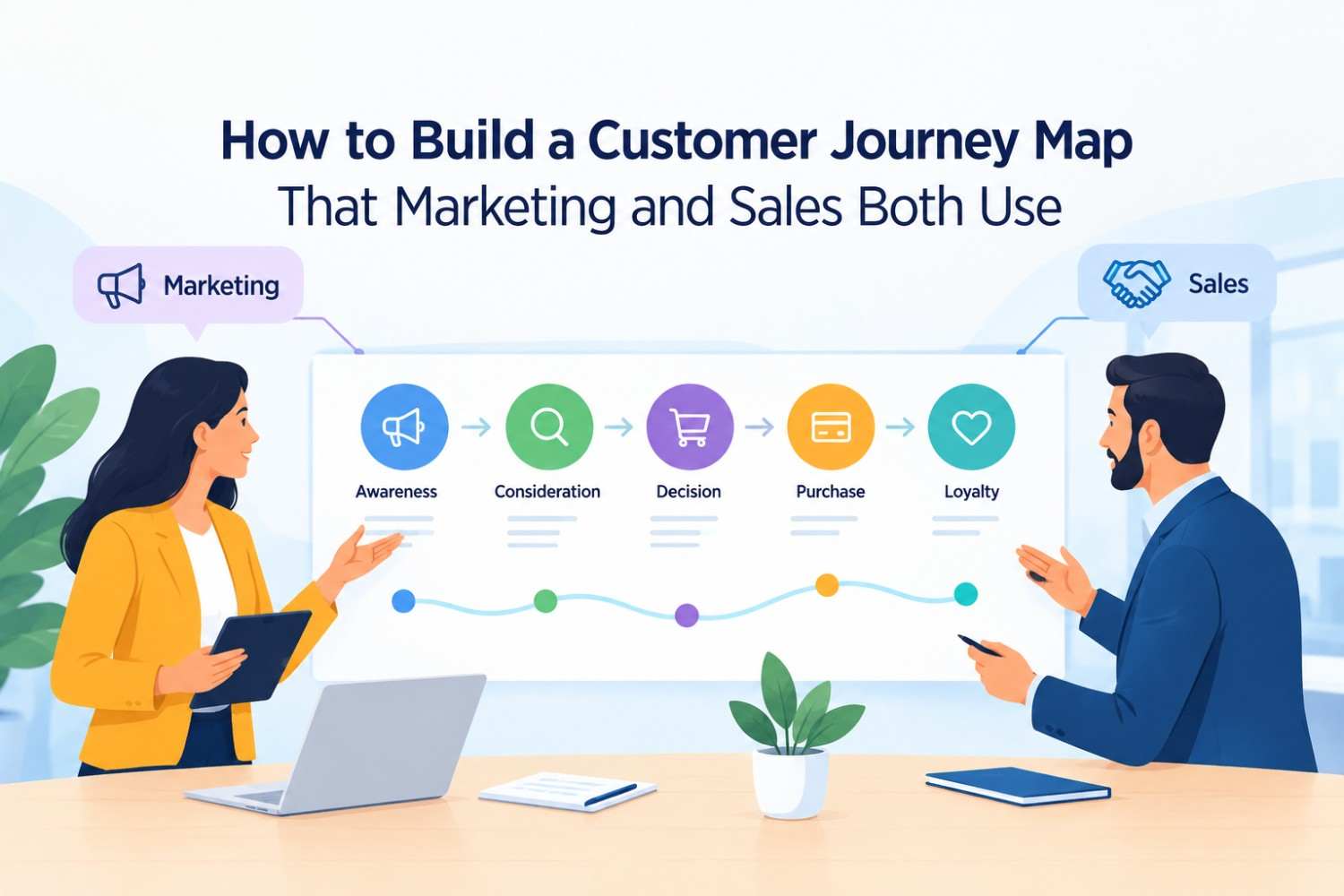
Mapping the customer journey and buyer journey helps identify customer needs, search intent, and key decision points.
4. Apply Predictive Analytics
Using predictive analytics, businesses can forecast purchasing behavior, identify retention opportunities, and prioritize high-value prospects.
Build an AI-Powered Content and SEO Strategy
A strong content strategy helps brands attract, engage, and convert audiences. Combining content marketing with AI allows businesses to create more relevant content and improve search visibility.
1. Enhance Content Creation and Personalization
AI content creation can support topic research, content briefs, keyword discovery, and content updates. While AI helps with production, human expertise remains important for maintaining quality and brand voice.
AI also supports content personalization by analyzing customer interests, engagement patterns, and browsing behavior, allowing marketers to deliver more relevant experiences.
2. Strengthen SEO With AI
Modern AI SEO extends beyond keyword targeting. Businesses should focus on Semantic SEO to build context around topics and establish topical authority through comprehensive content coverage.
3. Optimize for AI Search
Search behavior is evolving with the growth of AI search experiences. To improve visibility, marketers should optimize content for:
- AEO (Answer Engine Optimization)
- GEO (Generative Engine Optimization)
- AI Overviews
- LLM visibility
Authoritative content, clear structure, and complete topic coverage can help brands gain stronger visibility across AI-driven search platforms.
Optimize Paid Advertising With AI
AI is helping marketers improve digital marketing performance across PPC, paid search, paid media, and paid social campaigns by using real-time data to support smarter advertising decisions.
1. Improve Audience Targeting and Personalization
AI analyzes customer behavior to improve audience targeting and deliver more relevant ads. It also supports ad personalization by tailoring messaging, offers, and creative elements based on user interests and engagement patterns.
2. Automate Campaign Management
Platforms such as Google Ads use AI for bid optimization and campaign automation, helping marketers adjust bids, manage budgets, and identify opportunities across advertising channels.
3. Track Performance and ROAS
AI helps advertisers evaluate campaign results through conversion tracking and performance analysis. By identifying campaigns that contribute the most conversions, marketers can make better budget decisions and improve ROAS (Return on Ad Spend).
Personalize Customer Experiences With AI
A strong customer experience depends on delivering relevant interactions across every stage of the customer journey. AI helps businesses understand customer preferences and build stronger customer relationships.
1. Deliver Personalized Marketing
Using customer segmentation and behavioral insights, businesses can support personalized marketing through:
- Customized content
- Product recommendations
- Targeted promotions
- Personalized email campaigns
These interactions can improve customer engagement and encourage repeat purchases.
2. Use Behavioral Targeting and Conversational AI
Behavioral targeting helps marketers analyze browsing activity, purchase history, and content consumption to deliver relevant messaging.
At the same time, chatbots and conversational AI support:
- Customer support
- Product discovery
- Lead qualification
- Frequently asked questions
3. Improve Customer Retention
AI can identify customers who may be losing interest and help trigger timely outreach. These insights support stronger customer retention and help businesses build long-term customer relationships.
Automate Marketing Workflows and Campaigns
AI helps businesses reduce manual marketing tasks and save time through marketing automation and workflow automation.
1. Automate Lead Management
AI supports:
- Lead scoring based on customer interactions
- Lead nurturing through personalized follow-up content
- Faster identification of qualified prospects
2. Improve Campaign Execution
Tools powered by AI can support:
- Email automation for customer communications
- Social media automation for content scheduling and engagement monitoring
- Campaign automation across multiple marketing channels
- Customer journey automation based on user actions and behaviors
3. Connect Systems and Reporting
Workflow automation often relies on CRM integration, allowing teams to manage customer data from a central platform. AI also enables automated reporting, helping marketers track campaign performance, lead generation, and customer engagement without manually gathering data.
Measure AI Marketing Performance and ROI
Measuring results help businesses understand the impact of AI on marketing outcomes and overall growth.
1. Track Key Marketing Metrics
Marketing analytics and customer analytics provide insights into campaign performance. Key metrics include:
- Conversion rate
- Customer acquisition cost
- Customer lifetime value
- Marketing ROI
2. Strengthen Digital Analytics
Tools such as Google Analytics 4 support digital analytics by helping marketers track user behavior, traffic sources, and conversion tracking across channels.
3. Improve Attribution and Reporting
AI-powered attribution models help identify the marketing activities that influence conversions and revenue. Combined with performance reporting, these insights provide greater visibility into campaign results and revenue attribution, helping teams make more informed investment decisions.
Establish AI Governance and Scale the Strategy
As AI becomes part of everyday marketing operations, businesses need clear guidelines for its use.
Prioritize Governance and Security
Organizations can strengthen AI governance by protecting customer information through:
- Data privacy policies
- Data security controls
- Compliance and consent management
- Principles for Responsible AI
Maintain Human Oversight
While AI supports marketing decisions, human oversight remains important for maintaining:
- Content quality
- Brand consistency
- AI accuracy
Regular review helps reduce errors and supports trustworthy customer communications.
Build AI Literacy and Scale Responsibly
Organizations should invest in AI literacy so teams can confidently use AI tools and interpret results. As organizations increase their use of AI, businesses should focus on marketing scalability through testing, performance reviews, and continuous optimization of campaigns, workflows, and content strategies.
Conclusion
Building a successful AI-powered marketing strategy requires more than adopting new technology. By combining business goals, customer insights, data-driven marketing, automation, personalization, and AI search optimization, businesses can improve customer experience and marketing performance. As AI becomes more integrated into marketing, responsible implementation can help businesses drive growth and strengthen their competitive position.
FAQs
1. What is an AI-powered marketing strategy?
An AI-powered marketing strategy uses artificial intelligence to analyze customer data, automate marketing activities, personalize interactions, and optimize campaigns. It helps businesses improve decision-making, increase efficiency, and support revenue-driven marketing goals.
2. How does AI improve customer segmentation?
AI analyzes customer demographics, behaviors, purchase history, and engagement patterns to create detailed audience segments. These insights help marketers deliver targeted messaging, relevant offers, and personalized experiences across multiple channels.
3. Can AI help with SEO and content marketing?
Yes. AI supports keyword research, content planning, semantic SEO, content optimization, topic clustering, and search trend analysis. It also helps businesses improve visibility across AI-driven search experiences and answer engines.
4. What role does AI play in paid advertising?
AI improves paid advertising by supporting audience targeting, bid optimization, ad personalization, and campaign management. It helps marketers analyze performance data, optimize budgets, and improve conversion outcomes and advertising returns.
5. How can businesses measure AI marketing ROI?
Businesses can measure AI marketing ROI through metrics such as conversion rates, customer acquisition cost, customer lifetime value, revenue attribution, and campaign performance. These indicators reveal AI’s contribution to marketing and business goals.