



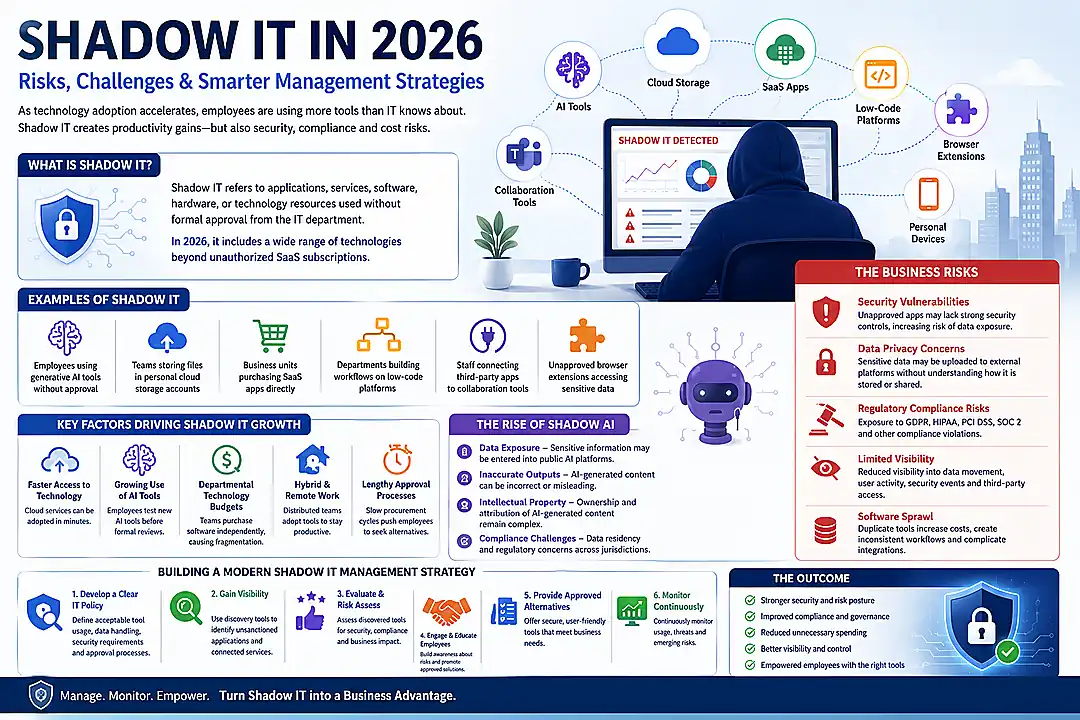
As enterprise technology environments become more decentralized, shadow IT remains a growing concern for IT leaders. Employees can access cloud applications, browser extensions, collaboration tools, file-sharing platforms, and generative AI solutions within minutes. While these technologies can support productivity, they may also create security, compliance, governance, and cost challenges.
In 2026, shadow IT extends beyond unauthorized SaaS subscriptions. It now includes AI applications, low-code platforms, unmanaged cloud resources, personal devices connected to corporate systems, and department-led technology purchases made without IT oversight. Remote and hybrid work environments have further expanded the number of technologies used across organizations.
Rather than attempting to eliminate shadow IT, organizations need a practical shadow IT management strategy. This guide examines the evolution of shadow IT, the risks it presents, and the approaches IT leaders can use to manage it effectively.
Understanding Shadow IT in 2026
Shadow IT refers to applications, services, software, hardware, or technology resources used without formal approval from the IT department.
Previously, shadow IT was often associated with employees adopting cloud applications outside standard procurement channels. In 2026, it covers a wider range of technologies.
Examples include:
- Employees using generative AI tools without approval
- Teams storing files in personal cloud storage accounts
- Business units purchasing SaaS applications directly
- Departments building workflows on low-code platforms without governance
- Staff connecting third-party applications to collaboration tools
- Unapproved browser extensions accessing sensitive data
As digital tools become easier to adopt, organizations face increasing challenges in maintaining visibility and oversight.
Key Factors Driving Shadow IT Growth
Shadow IT often emerges when employees believe existing corporate systems do not fully support their operational needs.
Several factors contribute to its growth:
- Faster Access to Technology
Cloud services are easy to adopt. Employees can sign up for a platform and begin using it within minutes. - Growing Use of AI Tools
Generative AI applications are now common across marketing, sales, HR, finance, and customer service. Employees often test new tools before formal reviews are completed. - Departmental Technology Budgets
Many business units control their own technology spending, allowing teams to purchase software independently and increasing technology fragmentation. - Hybrid and Remote Work
Distributed teams often adopt tools that support collaboration and productivity, sometimes without IT approval. - Lengthy Approval Processes
When software procurement and review cycles move slowly, employees frequently seek alternatives.
The Business Risks Behind Unauthorized Software Use
While unsanctioned tools can support productivity, they also introduce significant business risks.
- Security Vulnerabilities
Unapproved applications may lack strong security controls, increasing the risk of data exposure through weak authentication, poor encryption, or limited monitoring. - Data Privacy Concerns
Employees may upload confidential information to external platforms without understanding how the data is stored or shared. This can expose customer records, financial data, intellectual property, employee information, and business documents. - Regulatory Compliance Risks
Organizations subject to GDPR, HIPAA, PCI DSS, SOC 2, and other regulations may face compliance issues when sensitive data is transferred to unapproved platforms. - Limited Visibility
Applications operating outside IT oversight reduce visibility into data movement, user activity, security events, and third-party access, making incident investigations more difficult. - Software Sprawl
Duplicate applications can increase costs, create inconsistent workflows, and complicate reporting and integrations.
The New Face of Shadow IT: Shadow AI
One of the most notable developments in 2026 is the rise of shadow AI. Employees increasingly use AI-powered tools for content creation, data analysis, coding, research, customer support, and presentations. While these applications can improve efficiency, they also introduce new risks.
1. Data Exposure
Employees may unknowingly enter sensitive information into public AI platforms, creating concerns about how data is stored, processed, or retained.
2. Inaccurate Outputs
AI-generated content can include factual errors, misleading information, or biased recommendations, which may affect business decisions.
3. Intellectual Property Concerns
Questions around ownership, attribution, and the use of AI-generated content remain important considerations for organizations.
4. Compliance Challenges
AI applications may create data residency and regulatory concerns, particularly across multiple jurisdictions.
Building a Modern Shadow IT Management Strategy
Effective shadow IT management requires a balanced approach. Strict controls can encourage workarounds, while limited oversight can increase risk.
1. Develop a Clear Governance Framework
Organizations should establish policies covering:
- Approved application categories
- Security requirements
- Procurement procedures
- Data handling standards
- AI usage guidelines
- Vendor assessment criteria
2. Improve Technology Approval Processes
Delays often contribute to shadow IT adoption. IT teams can reduce friction by introducing expedited reviews, low-risk application categories, automated assessments, and self-service request portals.
3. Maintain an Approved Software Marketplace
A catalog of pre-approved tools can help employees find suitable solutions quickly. This may include collaboration platforms, project management applications, approved AI tools, file-sharing solutions, and productivity software.
Improving Visibility Across the Enterprise
Effective shadow IT management depends on understanding which technologies employees use across the organization.
1. Deploy SaaS Discovery Tools
SaaS discovery platforms help IT teams identify unapproved applications, data-sharing activities, user adoption trends, and emerging technology usage patterns.
2. Monitor Network Traffic
Network analysis can reveal applications and services connecting to corporate systems, helping IT teams identify unauthorized tools before adoption expands.
3. Use Endpoint Visibility Tools
Endpoint management platforms provide insights into installed software, browser extensions, and device activity, helping teams track technology usage.
4. Conduct Regular Application Audits
Periodic audits can uncover dormant licenses, duplicate platforms, unauthorized installations, and outdated applications while also identifying unnecessary software spending.
Collaborating with Business Units
Shadow IT often stems from business needs rather than intentional policy violations. As a result, managing it requires collaboration between IT and departmental teams.
1. Engage Department Leaders Early
Regular conversations with business stakeholders can help IT teams identify productivity challenges, technology gaps, and new requirements before employees adopt unapproved tools.
2 Evaluate Shadow IT Discoveries
Not every unauthorized application presents significant risk. Organizations should assess whether a tool addresses a business need, meets security requirements, or offers value beyond existing approved solutions.
3. Build a Technology Champion Network
Technology champions within departments can help communicate governance policies, promote approved tools, share business requirements, and report new technology usage.
Security Best Practices for Shadow IT Control
1. Adopt Zero Trust Principles
Zero Trust helps reduce risk by validating user access, devices, sessions, and access conditions before granting permissions. This can limit exposure from unauthorized applications.
2. Strengthen Identity Management
Identity and access management plays a key role in shadow IT control. Organizations should use:
- Multi-factor authentication (MFA)
- Single sign-on (SSO)
- Conditional access policies
- Privileged access controls
3. Restrict Sensitive Data Movement
Data loss prevention (DLP) tools help identify and protect customer records, financial information, legal documents, intellectual property, and regulated data.
4. Conduct Vendor Risk Assessments
Software providers should be evaluated for security controls, compliance certifications, data handling practices, incident response capabilities, and third-party dependencies. Regular reviews help identify potential risks.
Preparing for the Future of Shadow IT
As AI, automation, low-code platforms, and decentralized technologies become more common, shadow IT will continue to evolve. IT leaders should focus on flexible governance, stronger application visibility, AI governance policies, closer collaboration with business units, and efficient procurement processes to balance innovation, security, and compliance.
Conclusion
Shadow IT remains a major challenge for IT leaders in 2026 as employees increasingly adopt SaaS applications, AI tools, cloud services, and automation platforms outside formal IT processes. Rather than attempting to eliminate shadow IT, organizations should focus on governance, visibility, security controls, and collaboration with business units.
Clear policies, stronger oversight, and practical approval processes can help reduce risk while supporting productivity. By adopting a balanced shadow IT management approach, organizations can support innovation while maintaining security, compliance, and operational stability.
FAQs
1. What is the biggest shadow IT risk facing enterprises in 2026?
The highest risk comes from employees using AI applications and cloud services that process sensitive corporate data without approval, creating security, compliance, intellectual property, and visibility concerns.
2. How can IT teams discover unauthorized software across the organization?
IT teams can use SaaS discovery platforms, endpoint management tools, network monitoring solutions, and periodic software audits to identify unapproved applications and technology usage patterns.
3. Why do employees continue using shadow IT despite existing policies?
Employees often seek faster solutions to business challenges, avoid lengthy approval procedures, access specialized functionality, or adopt productivity tools unavailable through approved enterprise platforms.
4. How does shadow AI differ from traditional shadow IT?
Shadow AI involves unauthorized use of artificial intelligence applications for content creation, coding, research, or analytics, introducing additional concerns related to data privacy and output accuracy.
5. What role does governance play in shadow IT management?
Governance establishes clear policies for software procurement, data handling, security requirements, vendor evaluations, and AI usage, helping organizations balance innovation with risk management objectives.
6. Can shadow IT ever provide business value?
Yes. Some unofficial tools solve genuine operational challenges, reveal unmet employee needs, and identify technologies that may later become approved enterprise solutions after proper evaluation.