


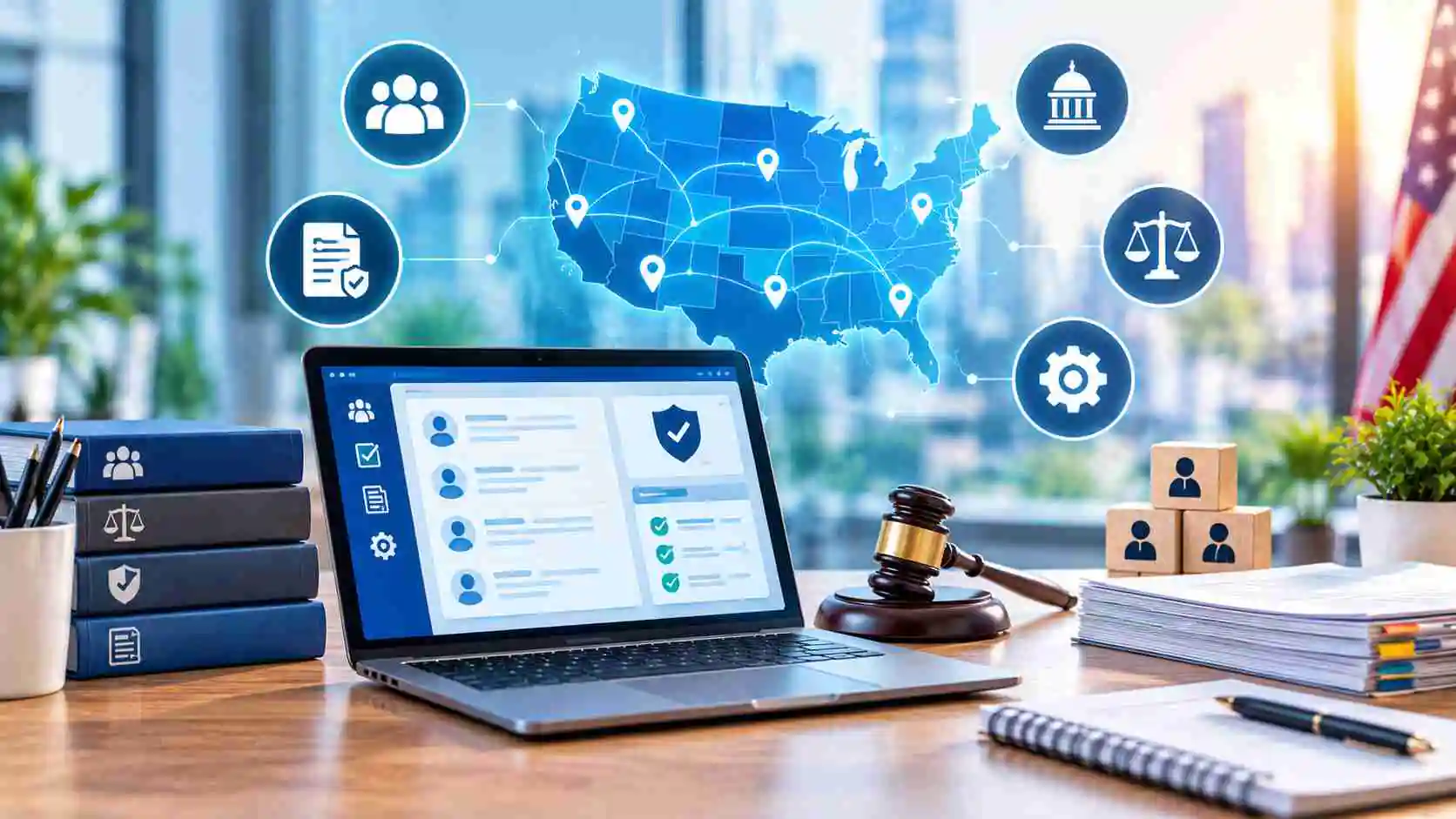
As businesses expand across state lines, HR compliance becomes far more complex than following federal employment regulations alone. Every state has its own labor laws, wage requirements, leave mandates, workplace protections, and employee rights. What may be compliant in one state can create legal and financial exposure in another.
For organizations operating in multiple jurisdictions, HR compliance is no longer a periodic review activity. It requires continuous monitoring, accurate recordkeeping, policy alignment, and awareness of changing regulations. As companies prepare for HR compliance multi-state 2026 requirements, understanding the growing patchwork of employment laws is critical for avoiding penalties and supporting a consistent employee experience.
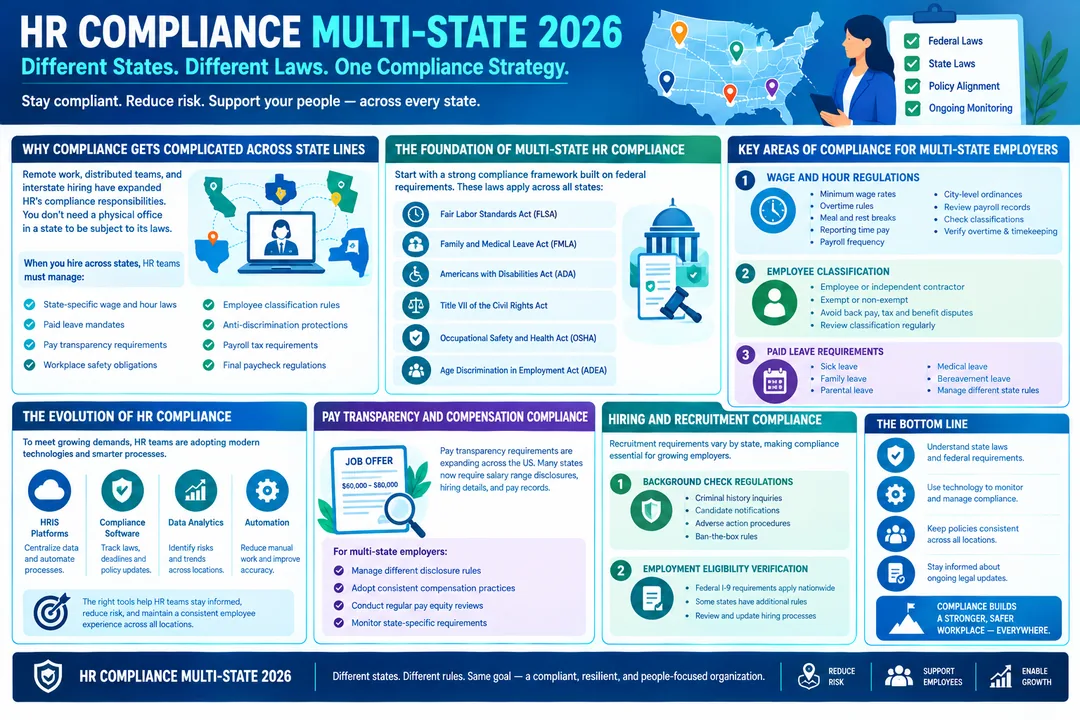
Why Compliance Gets Complicated Across State Lines
The rise of remote work, distributed teams, and interstate hiring has dramatically expanded the compliance responsibilities of HR departments. Organizations no longer need a physical office in a state to become subject to local employment laws.
When a company hires employees across several states, HR teams must manage:
- State-specific wage and hour laws
- Paid leave mandates
- Pay transparency requirements
- Workplace safety obligations
- Employee classification rules
- Anti-discrimination protections
- Payroll tax requirements
- Final paycheck regulations
The Foundation of Multi-State HR Compliance
Before tackling state-specific obligations, organizations must establish a strong compliance framework built on federal requirements.
Several federal laws apply across all states, including:
- Fair Labor Standards Act (FLSA)
- Family and Medical Leave Act (FMLA)
- Americans with Disabilities Act (ADA)
- Title VII of the Civil Rights Act
- Occupational Safety and Health Act (OSHA)
- Age Discrimination in Employment Act (ADEA)
Key Areas of Compliance for Multi-State Employers
1. Wage and Hour Regulations
Wage and hour compliance remains a major challenge for organizations operating across state lines. Requirements can vary based on minimum wage rates, overtime rules, meal and rest breaks, reporting time pay, and payroll frequency. In some locations, city-level wage ordinances add another layer of complexity.
A payroll process that works in one state may not satisfy requirements in another. Regular reviews of payroll records, employee classifications, overtime calculations, and timekeeping practices can help identify compliance gaps before they become costly issues.
2. Employee Classification
Worker classification remains a common area of scrutiny. Employers must determine whether individuals qualify as employees or independent contractors, as well as exempt or non-exempt employees.
Classification mistakes can result in back pay obligations, tax liabilities, benefits disputes, and regulatory penalties. As freelance and contract work become more common, classification reviews should remain part of broader HR compliance multi-state 2026 planning efforts.
3. Paid Leave Requirements
State leave laws continue to expand through ongoing employment law updates. Requirements may include paid sick leave, family leave, parental leave, medical leave, and bereavement leave.
For multi-state employers, the challenge is managing different accrual, eligibility, and documentation rules while maintaining clear and consistent workplace policies.
Pay Transparency and Compensation Compliance
Pay transparency requirements continue to expand across the US. Many states now require employers to disclose salary ranges in job postings, share compensation details during hiring, and maintain records supporting pay decisions.
For multi-state employers, managing different disclosure rules can be challenging. Adopting consistent compensation practices across locations often reduces compliance gaps. Regular pay equity reviews can also help identify disparities and support fair compensation decisions. As part of HR compliance multi-state 2026, organizations should monitor state-specific transparency requirements and related employment law updates.
Hiring and Recruitment Compliance
Recruitment requirements can vary significantly across states, making compliance a key consideration for growing employers.
1. Background Check Regulations
State laws may regulate criminal history inquiries, candidate notifications, background check timing, and adverse action procedures. Many jurisdictions have also adopted ban-the-box rules that limit when employers can discuss criminal records during hiring.
2. Employment Eligibility Verification
While federal I-9 requirements apply nationwide, some states impose additional verification obligations. Employers should regularly review onboarding processes and document management practices to meet applicable requirements.
3. Interview and Application Practices
Several states restrict questions related to salary history, credit history, arrest records, and family status. Keeping up with employment law updates can help organizations maintain compliant hiring practices as part of their HR compliance multi-state 2026 strategy.
Remote Work Adds New Compliance Risks
Remote and hybrid work have added new compliance challenges for multi-state employers. Employment laws are often based on where employees work rather than where the company is headquartered.
Employee relocations can trigger obligations related to payroll withholding, state tax registration, wage requirements, leave laws, workers’ compensation, and unemployment insurance. Without clear reporting procedures, these changes can go unnoticed. As part of HR compliance , organizations should monitor employee work locations and review policies regularly to keep pace with changing employment law updates.
Employee Handbook Management Across States
The employee handbook serves as a foundation for compliance across multiple jurisdictions. Since state employment laws vary, employers often maintain a core handbook supported by state-specific policies.
Key areas for review include:
- Leave administration
- Workplace conduct
- Anti-harassment policies
- Complaint procedures
- Remote work guidelines
- Equal employment opportunity policies
Regular policy reviews help organizations address legislative changes and maintain consistency across locations. As part of HR compliance multi-state 2026, companies should monitor relevant employment law updates and revise handbook content when needed.
Workplace Harassment and Discrimination Requirements
Harassment and discrimination laws vary across states, and many jurisdictions provide protections that extend beyond federal requirements.
HR teams should regularly review:
- Training obligations
- Complaint procedures
- Investigation standards
- Documentation requirements
- Retaliation protections
Some states recognize additional protected characteristics, including gender identity, marital status, military status, and reproductive health decisions. Tracking employment law updates helps employers stay current with changing requirements. Strong workplace policies also support broader HR compliance multi-state 2026 efforts and help reduce organizational risk.
Recordkeeping and Documentation Standards
Accurate documentation plays a critical role in compliance management and employment-related investigations.
Organizations should maintain records related to:
- Payroll and timekeeping
- Hiring decisions
- Performance evaluations
- Disciplinary actions
- Leave administration
- Accommodation requests
- Training completion
Record retention requirements may vary based on jurisdiction and document type. Periodic reviews can help identify gaps and outdated practices. As businesses prepare for HR compliance multi-state 2026, strong recordkeeping practices support compliance efforts and help address obligations arising from ongoing employment law updates.
Preparing for HR Compliance Multi-State 2026
Several trends are expected to influence HR compliance multi-state 2026 strategies and workforce management decisions.
1. Expanded Worker Protections
States continue to introduce employee-focused regulations covering:
- Leave benefits
- Gig worker rights
- Workplace accommodations
- Compensation transparency
Employers should regularly review policies to address new legal requirements.
2. Increasing Regulatory Enforcement
Regulatory agencies are increasing oversight in areas such as:
- Worker classification
- Wage and hour compliance
- Pay equity reviews
- Workplace safety standards
Periodic audits can help identify compliance gaps before they become larger issues.
3. Greater Focus on Workplace Flexibility
As remote work remains common, employers must account for:
- Employee work locations
- Payroll obligations
- State registration requirements
- Leave eligibility rules
Managing a distributed workforce requires ongoing compliance reviews across jurisdictions.
4. Data Privacy Expansion
Employee data privacy has become a larger compliance focus for employers.
Key areas to monitor include:
- Data collection practices
- Employee monitoring policies
- Data retention rules
- Access control procedures
Building an Effective Compliance Strategy
A strong compliance strategy requires ongoing reviews, accountability, and awareness of changing regulations.
1. Conduct Regular Compliance Audits
Review payroll practices, employee classifications, and leave policies regularly.
2. Monitor Employment Law Updates
Track legislative changes that affect employees across different states.
3. Train Managers and HR Staff
Training should cover:
- Hiring practices
- Leave management
- Workplace accommodations
- Employee relations
4. Standardize Where Possible
Consistent processes can reduce administrative complexity across locations.
5. Work With Employment Law Experts
Legal and HR specialists can help organizations navigate compliance challenges and support HR compliance multi-state 2026 planning.
Common Multi-State Compliance Mistakes to Avoid
Multi-state employers often encounter compliance issues due to overlooked requirements. Common mistakes include:
- Applying one policy across all states
- Misclassifying workers
- Overlooking remote employee locations
- Failing to update handbooks
- Ignoring local wage laws
- Poor documentation practices
- Missing employment law updates
Addressing these issues can support HR compliance multi-state 2026 efforts and help reduce the risk of audits, penalties, and legal disputes.
Conclusion
Managing compliance across multiple states requires employers to keep pace with federal, state, and local regulations. As workforces expand across jurisdictions, HR teams must navigate a wider range of legal obligations and workplace requirements.
For HR compliance multi-state 2026, organizations should prioritize policy reviews, worker classification, pay transparency, leave administration, and remote work policies. Regular monitoring of employment law updates can help businesses address regulatory changes, reduce compliance risks, and maintain consistent HR practices across locations.
FAQs
1. What is multi-state HR compliance?
Multi-state HR compliance refers to meeting employment, payroll, leave, workplace, and recordkeeping requirements across multiple states while following both federal regulations and state-specific labor laws.
2. Why is HR compliance more difficult for businesses operating in multiple states?
Each state may have unique wage, leave, hiring, tax, and workplace protection requirements. Managing different legal standards simultaneously increases administrative complexity and compliance risk.
3. How does remote work affect multi-state compliance obligations?
Remote employees can trigger state-specific employment requirements based on their location. Employers may need updated payroll registrations, tax withholding procedures, and leave policy administration.
4. What are the biggest compliance risks for multi-state employers?
Common risks include worker misclassification, incorrect overtime calculations, outdated policies, pay transparency violations, inadequate documentation, and failure to monitor changing employment regulations.
5. How often should organizations review their HR compliance policies?
Organizations should review HR policies at least once a year and conduct additional reviews whenever employment law updates affect the states where employees work.
6. What role does an employee handbook play in compliance?
A handbook communicates workplace expectations, policies, and legal obligations. State-specific supplements help employers address varying regulations while maintaining organizational consistency across locations.
7. How can businesses prepare for HR compliance multi-state 2026 requirements?
Companies should audit policies, monitor legislative developments, track employee locations, review classification practices, strengthen documentation procedures, and provide ongoing compliance training for managers and HR teams.