



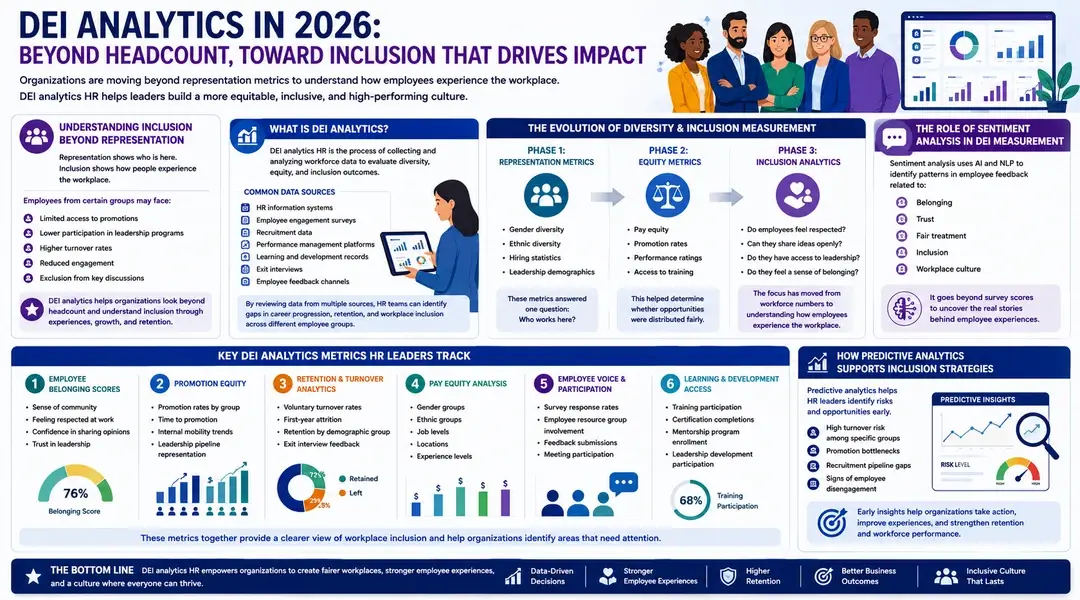
For years, organizations have measured Diversity, Equity, and Inclusion (DEI) efforts through workforce demographics and representation data. While these metrics remain valuable, they only show who is part of the organization, not how people experience the workplace.
In 2026, HR teams are looking beyond headcount to understand whether employees feel respected, heard, and supported. This growing focus has increased the importance of DEI analytics HR practices that examine employee engagement, career progression, retention, and workplace sentiment. With more companies tracking inclusion through workforce data, HR leaders are gaining a clearer understanding of where employees thrive and where challenges exist.
Understanding Inclusion Beyond Representation
Representation data is an important starting point for DEI efforts. It shows whether organizations are attracting diverse talent and building balanced teams. However, workforce demographics alone cannot reveal how employees experience the workplace.
Employees from certain groups may face challenges such as:
- Limited access to promotions
- Lower participation in leadership programs
- Higher turnover rates
- Reduced engagement
- Exclusion from key discussions
For example, women may represent a large share of the workforce but remain underrepresented in leadership roles. This is where DEI analytics HR becomes valuable. It helps organizations look beyond headcount and understand inclusion through employee experiences, growth opportunities, and retention trends.
What is DEI Analytics?
DEI analytics HR refers to the process of collecting and analyzing workforce data to evaluate diversity, equity, and inclusion outcomes. It helps organizations understand not only workforce composition but also employee experiences and access to opportunities.
Common data sources include:
- HR information systems
- Employee engagement surveys
- Recruitment data
- Performance management platforms
- Learning and development records
- Exit interviews
- Employee feedback channels
By reviewing data from multiple sources, HR teams can identify gaps in career progression, retention, and workplace inclusion across different employee groups.
The Evolution of Diversity and Inclusion Measurement
DEI measurements have changed considerably over the past decade.
Phase 1: Representation Metrics
Organizations focused on:
- Gender diversity
- Ethnic diversity
- Hiring statistics
- Leadership demographics
These metrics answered one question: Who works here?
Phase 2: Equity Metrics
Companies began evaluating:
- Pay equity
- Promotion rates
- Performance ratings
- Access to training
This helped determine whether opportunities were distributed fairly.
Phase 3: Inclusion Analytics
Organizations now examine employee experiences by asking:
- Do employees feel respected?
- Can they share ideas openly?
- Do they have access to leadership?
- Do they feel a sense of belonging?
The focus has moved from workforce numbers to understanding how employees experience the workplace.
Key DEI Analytics Metrics HR Leaders Track
Organizations are broadening their approach to inclusion by looking at metrics that go beyond workforce demographics. DEI analytics HR helps teams understand employee experiences, career growth, and workplace equity.
1. Employee Belonging Scores
Belonging is a strong indicator of inclusion. HR teams often assess:
- Sense of community
- Feeling respected at work
- Confidence in sharing opinions
- Trust in leadership
2. Promotion Equity
Promotion data shows whether advancement opportunities are fairly distributed. Common metrics include:
- Promotion rates by employee group
- Time to promotion
- Internal mobility trends
- Leadership pipeline representation
3. Retention and Turnover Analytics
Retention data highlights how different employee groups experience the workplace over time. Key measures include:
- Voluntary turnover rates
- First-year attrition
- Retention by demographic group
- Exit interview feedback
4. Pay Equity Analysis
Organizations review compensation across:
- Gender groups
- Ethnic groups
- Job levels
- Locations
- Experience levels
5. Employee Voice and Participation
Participation often reflects how comfortable employees feel contributing ideas. HR teams monitor:
- Survey response rates
- Employee resource group involvement
- Feedback submissions
- Meeting participation
6. Learning and Development Access
Career growth opportunities are another important inclusion metric. Organizations track:
- Training participation
- Certification completions
- Mentorship program enrollment
- Leadership development participation
Together, these metrics provide a clearer view of workplace inclusion and help organizations identify areas that need attention.
The Role of Sentiment Analysis in DEI Measurement
Many organizations are looking beyond survey scores and examining employee comments to better understand workplace experiences.
Sentiment analysis uses artificial intelligence and natural language processing to identify patterns in feedback related to:
- Belonging
- Trust
- Fair treatment
- Inclusion
- Workplace culture
For example, survey results may appear positive, while written comments highlight concerns about career growth or leadership communication. This additional layer of analysis helps HR teams gain a more accurate view of employee experiences and inclusion efforts.
How Predictive Analytics Supports Inclusion Strategies
Predictive analytics is becoming a valuable part of DEI programs. Rather than waiting for workplace issues to appear, organizations use data to identify potential risks early.
Predictive models can help HR leaders spot:
- High turnover risk among specific groups
- Promotion bottlenecks
- Recruitment pipeline gaps
- Signs of employee disengagement
For example, rising first-year attrition within a particular employee group may indicate a need for additional support. These insights help organizations address inclusion challenges before they have a wider impact on retention and workforce performance.
Using Intersectional Analysis for Better Insights
A common limitation of traditional DEI measurement is analyzing employee groups separately. Intersectional analysis looks at how overlapping identities influence workplace experiences.
Examples include:
- Women in leadership roles
- Early-career employees from underrepresented communities
- Employees with disabilities
- Veterans from diverse backgrounds
This approach helps organizations uncover patterns that broader demographic data may miss. For example, overall promotion rates for women may look positive, while women from certain ethnic groups face fewer advancement opportunities. Intersectional analysis provides a more detailed view of inclusion outcomes and workplace equity.
Common Challenges in DEI Analytics
While DEI analytics HR offers valuable insights, organizations often face several obstacles when collecting and interpreting workforce data.
1. Data Privacy Concerns
Employees may be reluctant to share demographic information if they are unsure how it will be used or protected.
2. Limited Data Quality
Incomplete or outdated workforce data can affect the accuracy of analysis and reporting.
3. Measuring Employee Experiences
Factors such as inclusion, belonging, and psychological safety are not always easy to measure through numbers alone.
4. Bias in Analytics Models
Historical workplace patterns can influence analytics results and lead to misleading conclusions if data is not reviewed regularly.
Addressing these challenges helps organizations build more reliable and meaningful inclusion measurement practices.
Building an Effective DEI Analytics Framework
A successful DEI analytics HR strategy starts with clear goals and consistent measurement.
1. Start With Clear Goals
Organizations should identify priorities such as:
- Improving belonging scores
- Increasing leadership diversity
- Reducing turnover gaps
- Addressing pay disparities
2. Combine Quantitative and Qualitative Data
Numbers alone do not provide a complete picture. Organizations should combine:
- Employee surveys
- Demographic data
- Employee feedback
- Exit interviews
- Focus group insights
3. Create Accountability
Accountability plays a key role in turning insights into action. Many organizations share DEI metrics with managers and leadership teams to support informed decision-making.
4. Monitor Progress Continuously
Regular monitoring helps HR teams track progress, identify emerging issues, and refine their inclusion efforts over time. Frequent reviews often provide more useful insights than annual reporting alone.
The Future of DEI Analytics in 2026 and Beyond
The future of DEI analytics HR is focused on understanding employee experiences through richer and more connected data. As diversity inclusion measurement 2026 continues to evolve, organizations are adopting tools that provide deeper workforce insights.
Key Trends to Watch
- Real-time workforce dashboards
- Advanced sentiment analysis
- Predictive risk modeling
- Skills-based workforce insights
- Employee experience analytics
HR leaders increasingly recognize that hiring and representation data tell only part of the story. Measuring inclusion requires understanding how employees grow, contribute, and engage throughout their careers. As People analytics capabilities expand, DEI analytics will play a larger role in shaping workplace culture and long-term talent strategies.
Conclusion
Representation numbers can show who is in the organization, but they cannot explain how people experience the workplace. By using DEI analytics HR, organizations can identify gaps in career progression, retention, belonging, and access to opportunities.
Metrics such as belonging, retention, promotion rates, and employee participation help HR teams spot patterns that might otherwise be missed. They can reveal where career opportunities are uneven, where engagement is dropping, and which groups may need additional support. These insights provide a stronger foundation for building a workplace where inclusion is reflected in everyday employee experiences.
FAQs
1. What is DEI analytics in HR?
DEI analytics involves collecting and evaluating workforce data to understand diversity, equity, and inclusion outcomes. It helps organizations measure employee experiences, fairness, engagement, retention, and career growth patterns.
2. Why is measuring inclusion beyond headcount important?
Headcount shows workforce representation but does not reveal employee experiences. Inclusion metrics help organizations understand belonging, participation, career advancement opportunities, and workplace culture across different groups.
3. Which metrics are commonly used in DEI analytics?
Organizations typically measure belonging scores, promotion equity, retention rates, pay equity, employee participation levels, leadership representation, learning opportunities, and workforce sentiment to assess inclusion outcomes.
4. How does sentiment analysis support DEI initiatives?
Sentiment analysis evaluates employee comments and feedback to uncover themes related to trust, belonging, fairness, and inclusion. It provides insights that traditional survey scores may be missed.
5. What role does predictive analytics play in DEI measurement?
Predictive analytics helps HR teams identify potential turnover risks, engagement declines, promotion barriers, and recruitment challenges before they affect workforce inclusion and organizational performance.
6. What is an intersectional analysis in DEI analytics?
Intersectional analysis examines how overlapping identities influence workplace experiences. It helps organizations identify unique challenges faced by employee groups that may not appear in broader reporting.
7. How can companies improve their DEI analytics strategy?
Companies can strengthen DEI analytics by combining workforce data, employee feedback, engagement surveys, and accountability measures while regularly monitoring progress against clearly defined inclusion goals.