



A new employee’s first few weeks can influence how they view an organization and their future within it. While recruitment brings talent through the door, effective employee onboarding programme design helps employees understand their roles, build workplace connections, and start contributing sooner.
Modern onboarding goes far beyond orientation and paperwork. It introduces company culture, performance expectations, key stakeholders, and the resources employees need to succeed. When onboarding is planned with clear objectives and support systems, organizations can improve engagement, strengthen retention, and accelerate new hire productivity from the very beginning.
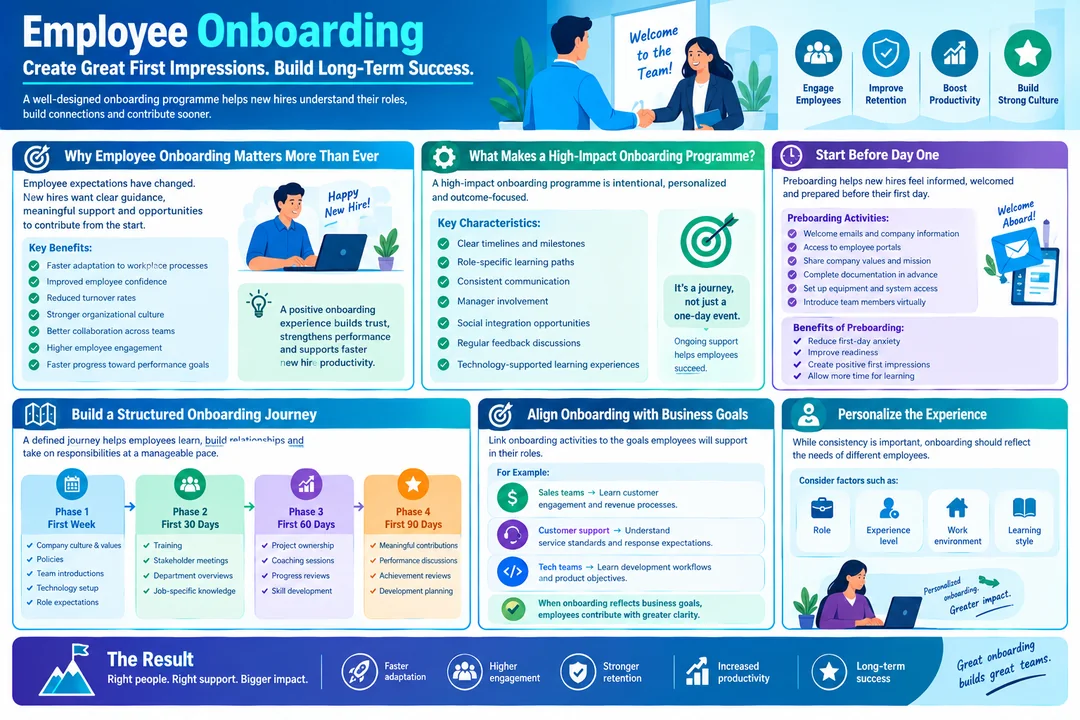
Why Employee Onboarding Matters More Than Ever
Employee expectations have changed. New hires want clear guidance, meaningful support, and opportunities to contribute from the start. When onboarding lacks structure, employees may struggle to understand their roles and workplace expectations.
Effective onboarding offers several benefits:
- Faster adaptation to workplace processes
- Improved employee confidence
- Reduced turnover rates
- Stronger organizational culture
- Better collaboration across teams
- Higher employee engagement
- Faster progress toward performance goals
A positive onboarding experience helps employees build trust in their employer and feel connected to the organization. This foundation can improve retention, strengthen performance, and support faster new hire productivity.
What Makes an Employee Onboarding Programme High Impact?
A high-impact onboarding programme is intentional, personalized, and outcome-focused. It helps employees understand their roles, build workplace connections, and gain the knowledge needed to succeed during their first few months.
Common characteristics of a high-impact onboarding programme include:
- Clear timelines and milestones
- Role-specific learning paths
- Consistent communication
- Manager involvement
- Social integration opportunities
- Regular feedback discussions
- Technology-supported learning experiences
Instead of treating onboarding as a one-day activity, successful organizations approach it as a structured journey. Ongoing guidance, training, and support help employees build confidence, contribute more effectively, and adapt to the workplace with greater ease.
Start Before Day One
One common onboarding mistake is waiting until an employee’s first day to begin the process. Preboarding helps new hires feel informed, welcomed, and prepared before they officially join the organization.
Preboarding Activities to Consider
- Sending welcome emails and company information
- Providing access to employee portals
- Sharing company values and mission
- Completing required documentation in advance
- Setting up equipment and system access
- Introducing team members virtually
These early interactions help employees build familiarity with the workplace before day one.
Benefits of Preboarding
Preboarding can:
- Reduce first-day anxiety
- Improve readiness
- Create positive first impressions
- Allow more time for learning during the first week
A well-planned start helps employees settle into their roles more comfortably and begin contributing with confidence.
Build a Structured Onboarding Journey
A defined onboarding journey helps employees learn, build relationships, and take on responsibilities at a manageable pace.
Phase 1: First Week
Focus on helping employees understand the organization through:
- Company culture and values
- Workplace policies
- Team introductions
- Technology setup
- Role expectations
Phase 2: First 30 Days
The first month should focus on learning and relationship building through training, stakeholder meetings, department overviews, and job-specific knowledge.
Phase 3: First 60 Days
Employees can begin contributing more actively through project ownership, coaching sessions, progress reviews, and skill development activities.
Phase 4: First 90 Days
At this stage, employees should make meaningful contributions. Performance discussions, achievement reviews, and development planning help prepare them for long-term success.
Align Onboarding with Business Goals
Many onboarding programmes focus on introducing company policies and culture but spend less time connecting employees to business priorities. A more effective approach links onboarding activities to the goals employees will support in their roles.
For example:
- Sales teams should learn customer engagement and revenue-related processes.
- Customer support professionals should understand service standards and response expectations.
- Technology teams should gain familiarity with development workflows and product objectives.
When onboarding reflects business goals, employees can better understand their responsibilities, contribute with greater clarity, and see how their work supports organizational success.
Personalize the Experience
While consistency is important, onboarding should reflect the needs of different employees. Factors such as role, experience level, work environment, and learning preferences can influence how people learn and adapt.
Consider:
- Job responsibilities
- Professional experience
- Remote, hybrid, or office-based work
- Preferred learning styles
A personalized approach helps employees receive relevant information, engage more effectively with training, and settle into their roles with greater confidence.
Involve Managers Early and Often
Managers have a direct influence on the onboarding experience, yet many programmes place most responsibilities on HR. New employees often turn to their managers for guidance, feedback, and clarity about their roles.
Manager Responsibilities During Onboarding
- Setting clear performance expectations
- Holding regular check-ins
- Providing constructive feedback
- Introducing key collaborators
- Supporting skill development
- Recognizing early accomplishments
Regular conversations help employees understand priorities, address questions, and build stronger working relationships. Providing managers with onboarding checklists and guidance can create a more consistent experience across teams.
Strengthen Social Connections
A sense of belonging plays an important role in how employees adapt to a new workplace. Building relationships should be a planned part of onboarding rather than something left to develop on its own.
Ways to Encourage Social Integration
- Team welcome meetings
- Informal coffee chats
- Peer mentoring programmes
- Cross-functional introductions
- Employee resource group participation
- Collaborative project assignments
These activities help employees become familiar with colleagues and workplace culture while encouraging collaboration across teams.
Create a Buddy Programme
An onboarding buddy can help new hires:
- Understand workplace culture
- Learn team practices and expectations
- Find resources and information
- Build professional connections
- Gain confidence in daily interactions
Many employees feel more comfortable discussing routine questions with peers before approaching managers or HR teams.
Use Technology to Support Onboarding
Technology has become an important part of onboarding, helping organizations deliver more consistent experience across teams and locations. Digital tools give employees access to information, training materials, and resources throughout their onboarding journey.
Useful Onboarding Technologies
- Learning management systems
- Employee experience platforms
- Digital document management tools
- Collaboration platforms
- Communication applications
- Progress tracking dashboards
These tools can reduce manual tasks and make onboarding information easier to access. However, technology should support human interaction, not replace it. The strongest onboarding programmes combine digital resources with regular manager support, team conversations, and meaningful workplace connections.
Focus on Accelerating New Hire Productivity
A key goal of onboarding is helping employees contribute effectively in their roles as quickly as possible. Many organizations face challenges when performance expectations are unclear during the early stages of employment.
Establish Performance Milestones
Set measurable goals for:
- The first week
- The first month
- The first quarter
Examples may include completing training, participating in customer interactions, contributing to meetings, or learning essential systems and processes. Clear milestones help employees understand expectations and monitor progress.
Remove Common Productivity Barriers
Common challenges include:
- Delayed system access
- Unclear responsibilities
- Limited training
- Information overload
- Lack of visibility into key stakeholders
Addressing these issues can help improve confidence, support learning, and accelerate new hire productivity.
Gather Feedback Continuously
Employee feedback can reveal what is working well and where onboarding gaps exist. New hires often offer useful perspectives because the experience is fresh in their minds.
Collect Feedback at Key Intervals
Gather feedback after:
- Week one
- Day 30
- Day 60
- Day 90
Ask questions about role clarity, training effectiveness, and areas for improvement. Regular feedback helps HR teams identify common challenges and make onboarding programmes more effective over time.
Measure Onboarding Success
Organizations cannot improve onboarding without understanding what is working and what needs attention. Tracking key metrics helps HR teams evaluate programme effectiveness and identify areas for improvement.
Important Onboarding Metrics
- New hire productivity rates
- Employee engagement scores
- Retention rates
- Training completion rates
- Time-to-productivity
- Manager satisfaction
- New hire satisfaction
Key Questions to Ask
- How quickly do employees reach expected performance levels?
- Are turnover rates declining?
- Do employees report positive onboarding experiences?
- Are managers satisfied with onboarding outcomes?
Reviewing these metrics regularly can help organizations assess onboarding impact and support both employee and business success.
Common Onboarding Mistakes to Avoid
Even well-planned onboarding programmes can fall short when key areas are overlooked.
Common Mistakes
- Overloading employees with information
Sharing too much information at once can make it difficult for new hires to absorb important details. - Limited manager involvement
Without regular guidance from managers, employees may struggle to understand expectations and priorities. - Treating onboarding as a one-time event
Onboarding works best when learning and support continue beyond the first day. - Ignoring company culture
Employees need to understand workplace values, behaviors, and team dynamics. - Failing to measure results
Without feedback and performance data, identifying improvement opportunities becomes challenging.
Final Thoughts
A strong onboarding programme is more than an administrative requirement. It helps employees understand their roles, build workplace connections, and contribute with confidence. Effective employee onboarding programme design combines structured learning, manager involvement, social interaction, and regular feedback to support a positive employee experience.
Organizations that view onboarding as an ongoing process rather than a one-time event are often better positioned to retain talent and build engaged teams. A thoughtful approach can strengthen first impressions, support career development, and accelerate new hire productivity, creating benefits for both employees and the business.
FAQs
1. What is an employee onboarding programme?
An employee onboarding programme is a structured process that introduces new hires to their roles, workplace culture, policies, tools, and expectations, helping them adapt faster and contribute effectively within the organization.
2. Why is onboarding important for new hire productivity?
Effective onboarding helps employees understand job expectations, learn required processes, build workplace relationships, and access essential resources. This reduces adjustment time and supports faster new hire productivity and performance.
3. How long should an onboarding programme last?
Although orientation may take only a few days, most organizations extend onboarding over 60 to 90 days. This gives employees enough time to learn, build confidence, and settle into their roles.
4. What role do managers play in onboarding?
Managers guide employees through expectations, performance goals, feedback discussions, and team interactions. Their active involvement helps new hires gain clarity, develop confidence, and establish productive working relationships early on.
5. How can organizations personalize onboarding experiences?
Organizations can tailor onboarding based on role requirements, professional experience, work location, and learning preferences. A personalized approach helps employees receive relevant information and develop skills more effectively.
6. Which metrics help measure onboarding success?
Organizations can evaluate onboarding using metrics such as retention rates, employee satisfaction, engagement scores, training completion rates, time-to-productivity, and manager feedback on employee readiness and performance.
7. How does technology improve onboarding programmes?
Technology supports onboarding by providing easy access to training, documentation, communication tools, and progress tracking. It also helps organizations deliver consistent experiences while reducing manual administrative work.