



Businesses are turning to digital lending platforms to access funding and manage borrowing through digital channels. From working capital requirements to expansion plans, finance leaders now have a wide range of lending options. However, choosing the right platform involves more than comparing approval times and interest rates.
For CFOs, the decision can influence cash flow visibility, risk management, compliance, and borrowing costs. This CFO loan technology guide examines the factors finance leaders should evaluate and provides a practical digital lending platform comparison framework for selecting a platform that fits business needs.
Understanding Digital Lending Platforms
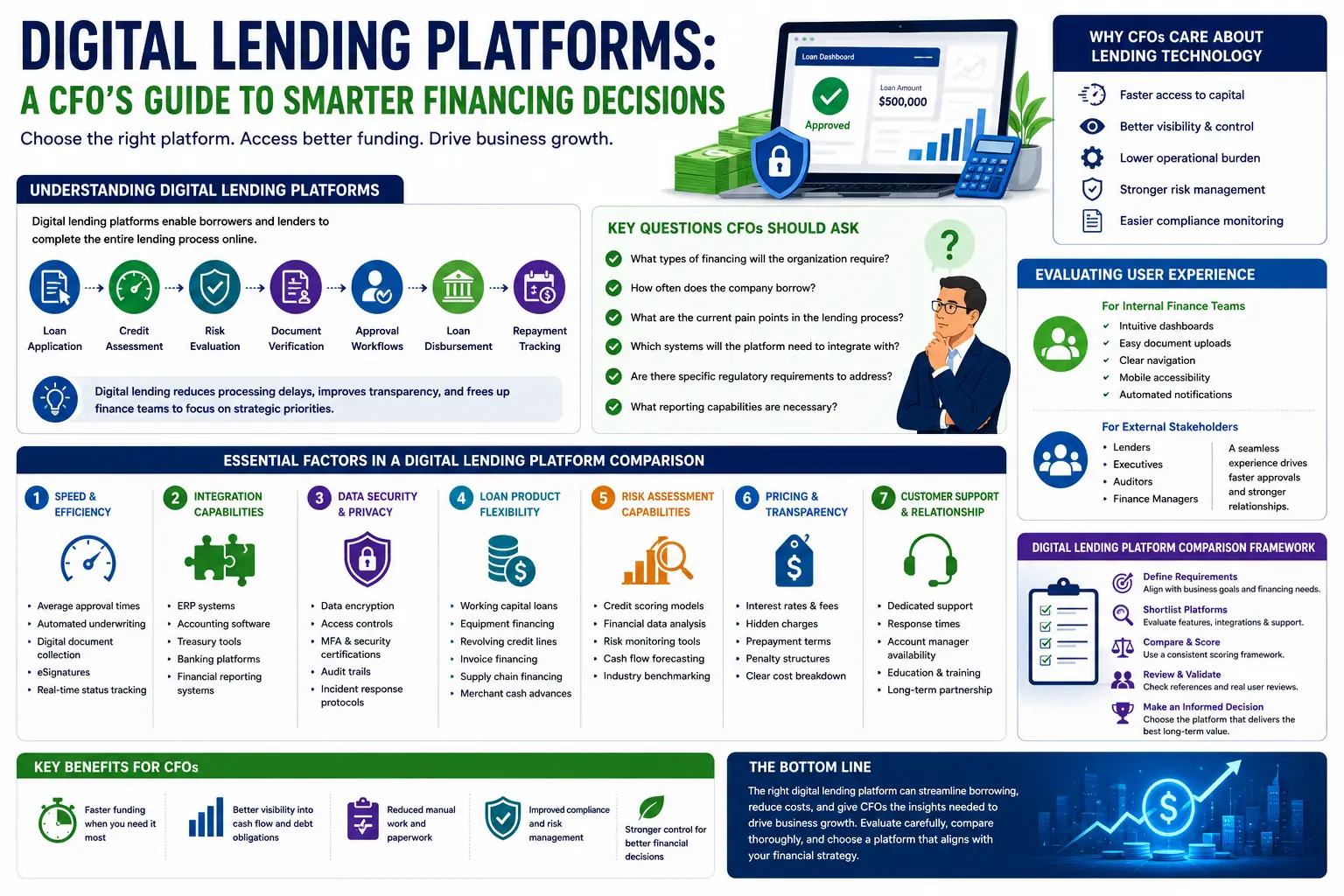
A digital lending platform is a technology-based solution that allows borrowers and lenders to complete the lending process online. These platforms support multiple stages of the lending cycle, including:
- Loan application
- Credit assessment
- Risk evaluation
- Document verification
- Approval workflows
- Loan disbursement
- Repayment tracking
Instead of depending on paper-heavy procedures and manual reviews, digital lending platforms bring these activities together within a single system.
This can reduce processing delays and provide better visibility into loan status and financial obligations. For CFOs, these platforms offer quicker access to funding, greater transparency across borrowing activities, and less time spent on administrative tasks.
Why CFOs Are Paying More Attention to Lending Technology
Business financing needs change rapidly. A company may need additional working capital, expansion funding, equipment financing, or short-term liquidity support with little notice.
Traditional lending systems often struggle to meet these requirements due to slow turnaround times and extensive documentation procedures.
Digital lending platforms offer advantages such as:
- Faster loan approvals
- Reduced paperwork
- Better financial visibility
- Real-time reporting
- Improved borrower experience
- Easier compliance monitoring
As finance departments increasingly embrace digital transformation, lending technology has become an important part of broader financial management strategies.
Key Questions CFOs Should Ask Before Choosing a Platform
Before evaluating vendors, CFOs should establish clear internal objectives.
Consider the following questions:
- What types of financing will the organization require?
- How often does the company borrow?
- What are the current pain points in the lending process?
- Which systems will the platform need to integrate with?
- Are there specific regulatory requirements that must be addressed?
- What reporting capabilities are necessary?
The answers will help narrow the list of potential providers and prevent unnecessary investments in features that may never be used.
Essential Factors in a Digital Lending Platform Comparison
1. Speed and Efficiency
One of the primary reasons companies adopt digital lending technology is access to faster financing.
When comparing platforms, examine:
- Average approval times
- Automated underwriting capabilities
- Digital document collection
- Electronic signatures
- Instant status tracking
Some platforms can provide decisions within hours, while others may still require several days despite marketing themselves as digital solutions.
CFOs should look beyond promotional claims and review actual performance metrics wherever possible.
2. Integration Capabilities
Modern finance teams rely on multiple software systems.
A lending platform should integrate smoothly with:
- Enterprise Resource Planning (ERP) systems
- Accounting software
- Treasury management tools
- Banking platforms
- Financial reporting systems
Strong integrations reduce duplicate data entry and minimize the risk of errors. For organizations using platforms such as SAP, Oracle, NetSuite, Microsoft Dynamics, or QuickBooks, compatibility can become a major deciding factor.
3. Data Security and Privacy
Financial information is among the most sensitive business data.
Before selecting a digital lending platform, CFOs should carefully review:
- Data encryption standards
- Access controls
- Multi-factor authentication
- Security certifications
- Audit trails
- Incident response protocols
Cybersecurity risks continue to grow, and any lending platform handling company financial records must maintain strong security measures.
A single breach could expose confidential financial information and create regulatory complications.
4. Loan Product Flexibility
Every business has different financing needs.
Some organizations require:
- Working capital loans
- Equipment financing
- Revolving credit lines
- Invoice financing
- Supply chain financing
- Merchant cash advances
A platform with broader lending options may offer greater value over time. CFOs should assess both current and future financing requirements rather than focusing solely on immediate needs.
5. Risk Assessment Capabilities
Advanced lending platforms increasingly use analytics and alternative data sources to evaluate creditworthiness.
Key areas to assess include:
- Credit scoring models
- Financial data analysis
- Risk monitoring tools
- Cash flow forecasting inputs
- Industry benchmarking
Better risk analysis can improve loan pricing and increase approval opportunities for qualified borrowers. It also provides finance teams with additional insights into their financial position and borrowing capacity.
Evaluating User Experience
1. For Internal Finance Teams
The platform should be simple enough for finance professionals to use without extensive training.
Look for features such as:
- Intuitive dashboards
- Easy document uploads
- Clear navigation
- Mobile accessibility
- Automated notifications
Complicated systems can lead to low adoption rates and wasted investments.
2. For External Stakeholders
In many cases, multiple stakeholders interact with lending platforms, including executives, auditors, lenders, and finance managers.
A user-friendly interface reduces friction and supports smoother collaboration throughout the borrowing process.
Reporting and Analytics Features
Data visibility is critical for modern CFOs.
Strong reporting capabilities can help answer important questions such as:
- What is the company’s total debt exposure?
- How much financing is currently available?
- What are the upcoming repayment obligations?
- Which facilities carry the highest costs?
- How does borrowing impact cash flow projections?
Useful reporting features include:
- Custom dashboards
- Debt portfolio summaries
- Repayment calendars
- Scenario analysis
- Exportable reports
- Real-time metrics
A platform that provides comprehensive financial insights can support better strategic planning.
Compliance and Regulatory Considerations
Financial regulations differ across industries and geographies.
When evaluating lenders and platforms, CFOs should verify:
- Compliance support features
- Document retention policies
- Audit readiness tools
- Regulatory reporting capabilities
- Data privacy compliance
The platform should assist teams in maintaining accurate records and responding quickly during audits or regulatory reviews.
Failure to address compliance requirements can result in penalties and operational disruptions.
Cost Structure Analysis
One of the biggest mistakes organizations make is focusing solely on interest rates.
A complete cost evaluation should include:
1. Direct Costs
- Interest expenses
- Origination fees
- Subscription charges
- Transaction fees
- Integration costs
2. Indirect Costs
- Staff training
- System maintenance
- Vendor support
- Process changes
Some platforms advertise low borrowing rates while charging substantial technology or service fees. CFOs should evaluate the total cost of ownership over several years to gain a realistic picture of value.
Scalability
A platform that works well today may not support future business growth. As organizations expand, financing requirements often become more complex.
Scalability factors include:
- Higher transaction volumes
- Multiple entity support
- International operations
- Additional user accounts
- Expanded reporting requirements
Choosing a scalable solution reduces the likelihood of costly migrations later.
Vendor Reputation and Stability
Technology capability is important, but the vendor behind the platform matters just as much.
Finance leaders should research:
- Years in operation
- Customer reviews
- Industry reputation
- Financial stability
- Product development history
Questions worth asking include:
- How frequently are platform updates released?
- What support resources are available?
- What is the average response time for issues?
- Does the vendor have experience serving similar organizations?
A reliable provider can become a long-term strategic partner rather than simply a software vendor.
The Role of Artificial Intelligence and Automation
Many digital lending platforms now include AI-powered features.
Common applications include:
- Credit risk assessment
- Fraud detection
- Document processing
- Predictive analytics
- Borrower profiling
While these capabilities can improve efficiency, CFOs should understand how decisions are generated. Transparency remains important, especially when automated models influence lending outcomes.
Finance leaders should seek platforms that provide visibility into their decision-making processes rather than relying entirely on black-box systems.
Red Flags to Watch For
During a digital lending platform comparison, be cautious of vendors that:
- Offer vague pricing structures
- Provide limited integration support
- Lack security certifications
- Have poor customer reviews
- Restrict data access
- Offer weak reporting features
These warning signs may indicate future operational challenges. Thorough due diligence helps reduce implementation risks and protects the organization’s financial interests.
Creating a Selection Framework
A structured evaluation process often produces better outcomes.
CFOs can create a scorecard using criteria such as:
|
Evaluation Area |
Suggested Weight |
|
Security |
20% |
|
Integration |
15% |
|
Cost |
15% |
|
User Experience |
10% |
|
Lending Products |
15% |
|
Reporting & Analytics |
10% |
|
Scalability |
10% |
|
Vendor Reputation |
5% |
This approach helps teams compare vendors objectively rather than relying solely on demonstrations or marketing materials.
Final Thoughts
Digital lending platforms have become an important part of corporate finance. They provide faster access to funding, improved visibility into borrowing activities, and greater operational efficiency compared to traditional lending processes.
However, not all platforms deliver the same value. A thoughtful evaluation should extend beyond loan approval speed and interest rates. CFOs must consider security, integrations, reporting capabilities, scalability, compliance support, vendor reputation, and total ownership costs.
By following a structured CFO loan technology guide and conducting a comprehensive digital lending platform comparison, finance leaders can select a solution that aligns with both immediate funding needs and long-term business objectives.
FAQs
1. What is a digital lending platform?
A digital lending platform is an online system that manages loan applications, credit assessments, approvals, disbursements, and repayments through technology-based processes with reduced paperwork and faster turnaround times.
2. Why should CFOs evaluate lending technology carefully?
The chosen platform affects funding access, borrowing costs, financial visibility, compliance management, and operational productivity. A thorough evaluation helps finance leaders avoid long-term technology and financing challenges.
3. What integrations should a digital lending platform support?
An effective platform should connect with ERP systems, accounting software, treasury tools, banking applications, and reporting systems to reduce manual work and improve data accuracy.
4. How important is security when selecting a lending platform?
Security is critical because lending platforms handle sensitive financial information. Strong encryption, access controls, authentication measures, and audit capabilities help protect organizational data from threats.
5. What reporting features should CFOs prioritize?
CFOs should look for debt tracking, repayment schedules, cash flow insights, portfolio summaries, custom dashboards, and real-time reporting to support accurate financial planning decisions.
6. Can digital lending platforms support company growth?
Many platforms are designed to handle growing transaction volumes, multiple business entities, additional users, and more complex financing needs as organizations expand over time.
7. What are common mistakes companies make when choosing a platform?
Organizations often focus only on interest rates while overlooking integration capabilities, reporting quality, security standards, vendor stability, and the overall cost of ownership.